


India’s Batting Think Tank Faces Big Decisions Ahead of Crucial Group Clash
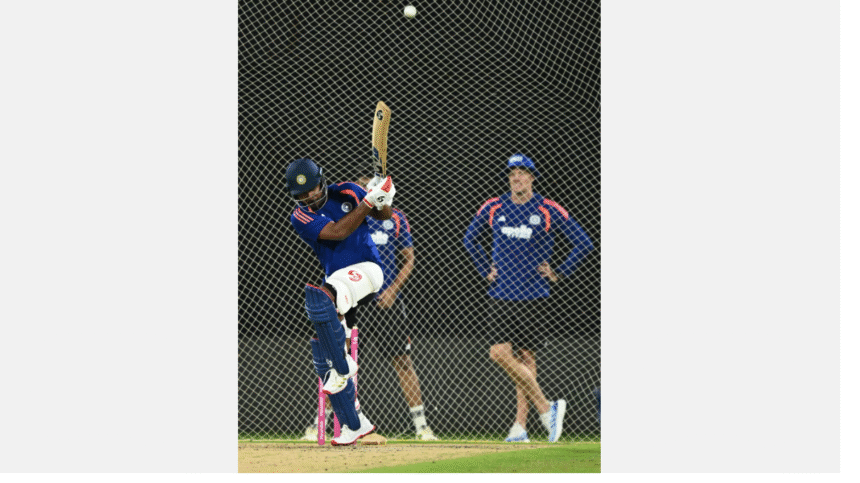
T20 World Cup IND vs ZIM group-stage clash against Zimbabwe, much of the pre-match buzz has centered not around bowling combinations or pitch conditions — but around an extended, intense net session by Sanju Samson. The Kerala wicketkeeper-batter, who has often found himself drifting in and out of India’s T20 plans, T20 World Cup IND vs ZIM spent significantly more time than usual in the nets on the eve of the match, sparking speculation about a potential reshuffle in India’s top order.
With India already deep into the tournament and aiming to fine-tune combinations ahead of the knockout stages, Samson’s long batting stint could indicate more than routine preparation. It may well be a tactical recalibration by the team management led by captain Rohit Sharma and head coach Rahul Dravid.
The bigger question now looms large: Is India preparing to rejig their batting lineup?
India’s Top Order: Stable Yet Under Scrutiny
India’s T20 batting structure has largely revolved around a defined core — Rohit Sharma at the top, T20 World Cup IND vs ZIM often paired with a dynamic partner, followed by the reliable presence of Virat Kohli at No. 3. The middle order typically features aggressive stroke-makers like Suryakumar Yadav and the all-round prowess of Hardik Pandya.
However, tournament cricket is rarely static. Form fluctuates, matchups dictate strategy, T20 World Cup IND vs ZIM and conditions demand flexibility. While India’s top order has provided solid starts in patches, there have been concerns about:
-
Strike rate during the powerplay
-
Occasional slow middle overs
-
Vulnerability against specific bowling types
Against Zimbabwe, T20 World Cup IND vs ZIM a team capable of disciplined bowling spells, India may be contemplating a proactive move rather than waiting for a setback.
Sanju Samson’s Long Net Session: Preparation or Promotion?
Observers at training noted that Samson not only faced an extended spell against pace but also spent significant time practicing against spin — including simulated match scenarios during the powerplay overs.
Such targeted preparation suggests a role beyond the traditional middle-order stabilizer. It hints at a potential opening slot or at least a No. 3 experiment.
Samson’s strengths are well documented:
-
Clean striking against pace
-
Ability to clear the infield early
-
Strong back-foot play
-
Innovative stroke range
In T20 cricket, where tempo often defines outcomes, T20 World Cup IND vs ZIM Samson offers a fearless approach that can shift momentum inside the first six overs.
If India are considering an aggressive powerplay strategy, promoting Samson could be a calculated gamble.
Zimbabwe: Not a Side to Be Taken Lightly
While Zimbabwe are not tournament favorites, they possess a bowling attack capable of testing established line-ups. Their disciplined seamers and skiddy spinners thrive on surfaces that offer grip.
India’s management may see this match as an opportunity to test flexibility without risking tournament stability. A tactical shuffle here would provide valuable data before facing stronger opponents in high-pressure encounters.
Strategic Considerations Behind a Rejig
Reordering a top order mid-tournament is not a decision taken lightly. But several strategic factors could justify such a move:
1. Left-Right Combination Dynamics
India often seek to disrupt bowling rhythm with alternating handedness. If matchups suggest better angles against Zimbabwe’s bowlers, Samson’s inclusion higher up could serve that objective.
2. Strike Rate Emphasis
Modern T20 cricket increasingly prioritizes intent over accumulation. Teams that dominate the powerplay often dictate match tempo. Samson’s natural attacking instinct aligns with this philosophy.
3. Workload Management
With a packed schedule, T20 World Cup IND vs ZIM minor niggles and workload considerations might prompt rotation within the batting order while maintaining overall balance.
Balancing Stability with Innovation
One of India’s strengths in recent ICC events has been clarity of roles. Frequent changes risk unsettling rhythm. However, T20 World Cup IND vs ZIM stagnation can be equally dangerous in a format that evolves rapidly.
Rohit Sharma has previously emphasized flexibility in white-ball cricket, acknowledging that situational adaptability is crucial. In bilateral series, India have experimented extensively. In World Cups, experimentation tends to be minimal — but not absent.
If Samson is indeed elevated, it would signal trust in his match-winning capability.
Samson’s T20 Evolution
Over the years, Samson’s T20 career has oscillated between brilliance and inconsistency. Yet, recent performances have demonstrated maturity:
-
Better shot selection
-
Improved temperament
-
Calculated aggression
His ability to anchor innings when required — while maintaining a high strike rate — makes him a valuable asset.
The long net session might reflect personal determination as much as tactical planning. Players often seek extra time before pivotal opportunities.
The Rohit-Kohli Equation
A reshuffle would inevitably impact the established Rohit-Kohli dynamic. Kohli’s adaptability allows him to slot in at various positions, T20 World Cup IND vs ZIM but his most impactful T20 role has traditionally been at No. 3.
If Samson opens, does Rohit shift down? Or does India experiment with a floating No. 3 based on match situation?
Such decisions would reflect long-term planning beyond just Zimbabwe.
Middle-Order Ripple Effect
Any top-order adjustment creates downstream consequences. Suryakumar Yadav thrives against pace and spin alike in the middle overs. Hardik Pandya’s finishing role relies on entering during overs 12-15.
If Samson moves up, someone else may slide into a finishing role — potentially altering the team’s death overs strategy. 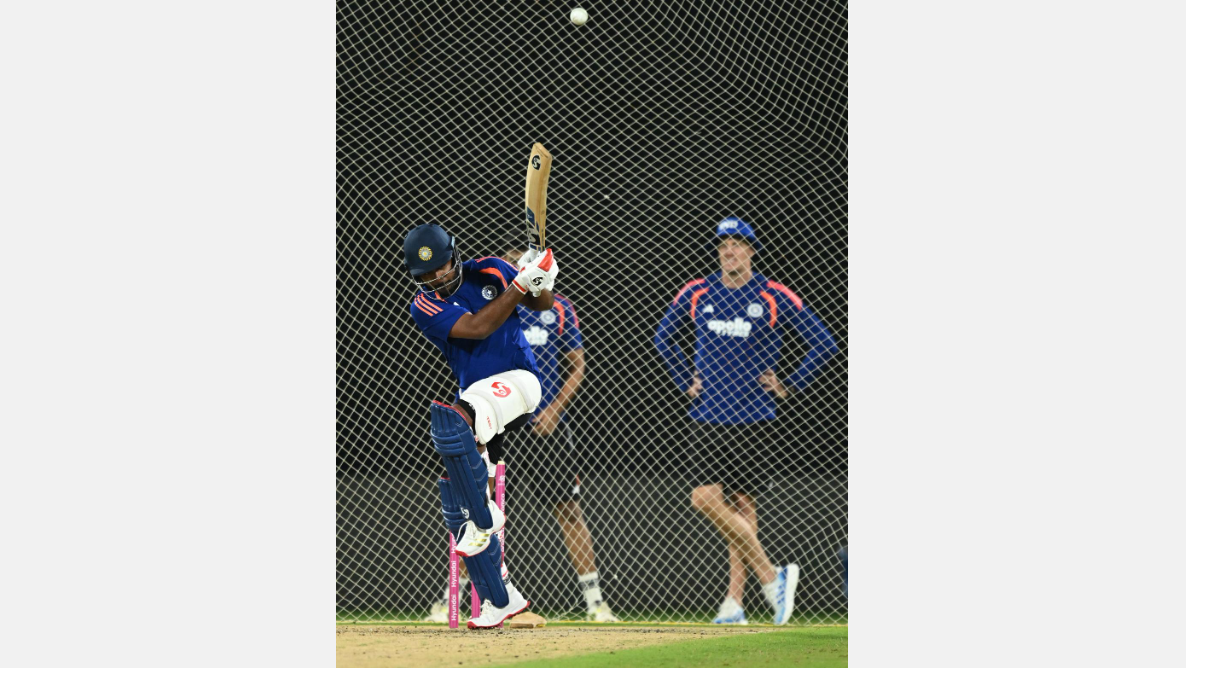

Practice Patterns as Tactical Indicators
Cricket training sessions often offer subtle clues:
-
Extended net sessions
-
Specific bowler matchups
-
Simulated chase scenarios
-
Rotational field drills
Samson reportedly practiced attacking inside-out shots against left-arm spin — a tactic frequently used in powerplays.
This preparation suggests intent rather than routine repetition.
Zimbabwe Clash as a Testing Ground
India’s tournament trajectory allows some flexibility at this stage. Experimenting now provides clarity ahead of high-stakes matches.
Zimbabwe’s disciplined but less intimidating bowling attack compared to top-tier nations makes this an ideal testing environment.
If the experiment works, India gain a strategic edge. If it falters, T20 World Cup IND vs ZIM they retain time to revert before knockout pressure mounts.
Mental Conditioning and Opportunity
For Samson, this could represent a defining moment. His international journey has been marked by sporadic appearances rather than sustained runs.
Extended practice sessions often signal hunger — a player aware that opportunity, T20 World Cup IND vs ZIM once missed, may not return soon.
In high-performance sport, preparation often precedes opportunity.
Team Management’s Broader Vision
India’s coaching group has consistently emphasized:
-
Role clarity
-
Match-up-based planning
-
Data-driven decisions
-
Fearless cricket
A top-order reshuffle would align with this modern T20 ideology.
Global cricket trends show teams unafraid to move anchors down the order to maximize powerplay aggression.
Voices from the Camp
While no official confirmation has emerged, insiders suggest discussions around maximizing powerplay impact.
India have sometimes been cautious in the first six overs in ICC tournaments. Against Zimbabwe, T20 World Cup IND vs ZIM an aggressive template could set the tone for future fixtures.
Zimbabwe’s Bowling Puzzle
Zimbabwe’s key strength lies in disciplined lines rather than raw pace. Early breakthroughs often come from patient pressure rather than express speed.
An aggressive Samson approach could disrupt that rhythm — forcing defensive fields early. 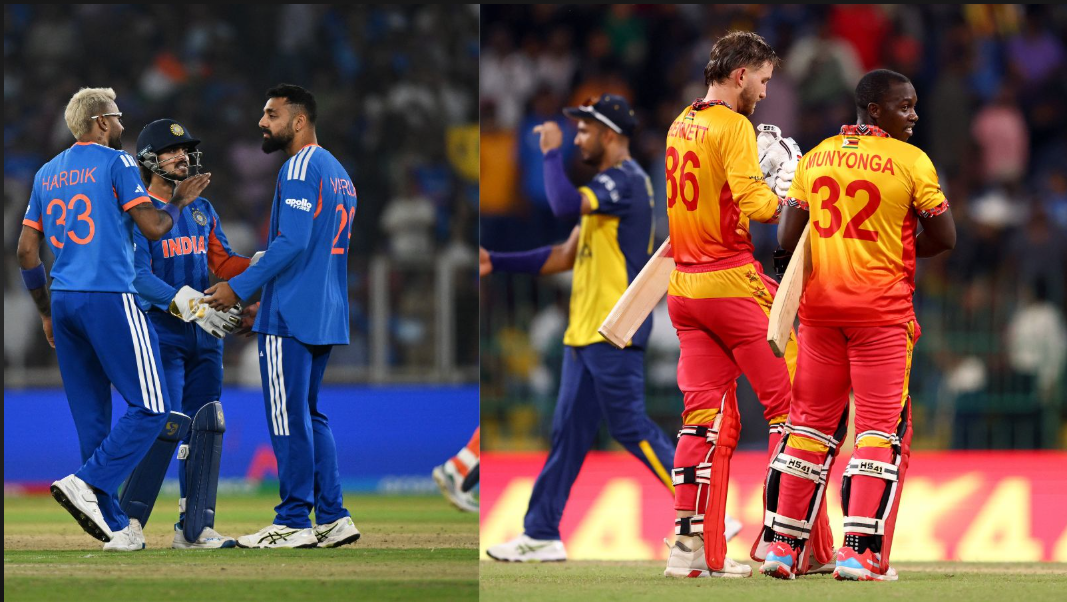

Historical Context: India’s Experimentation in ICC Events
India have historically been conservative with batting changes in ICC tournaments. However, T20 World Cup IND vs ZIM recent editions show increasing flexibility.
The T20 format demands boldness. Teams like England and Australia have shown success by backing attacking depth over traditional anchors.
India appear to be gradually embracing that philosophy.
Potential Playing XI Scenarios
If Samson moves up:
-
He may open alongside Rohit
-
Kohli could retain No. 3
-
Middle-order roles remain intact
Alternatively:
-
Samson at No. 3
-
Kohli anchoring if early wickets fall
-
Flexible middle overs rotation
The final decision may hinge on pitch conditions and toss outcome.
Psychological Impact on Zimbabwe
Opposition teams analyze patterns carefully. A surprise top-order change forces last-minute recalibration in bowling plans.
Zimbabwe’s analysts would have prepared for a specific lineup. A change disrupts those assumptions.
Conclusion: Tactical Experiment or Statement of Intent?
Sanju Samson’s extended net session has certainly fueled speculation — but more importantly, it has highlighted India’s evolving T20 mindset.
Whether or not a top-order reshuffle materializes against Zimbabwe, the signals are clear: India are thinking dynamically.
Tournament success often hinges on adaptability. With knockout stages looming, T20 World Cup IND vs ZIM the team management appears keen to refine combinations proactively.
If Samson does get the nod up the order, it won’t merely be a tactical adjustment — it will be a statement of intent: that India are willing to innovate in pursuit of T20 supremacy.
As the cricketing world watches India take on Zimbabwe, one storyline stands out — not just who plays, but where they play. ALSO READ:- IED Found on Srinagar–Baramulla Highway in J&K: Major Tragedy Averted After Timely Detection 2026