




Introduction
In a UNRWA significant move that reverberates through international relations and the Israeli-Palestinian conflict, Israel has formally notified the United Nations (UN) of its decision to sever ties with the United Nations Relief and Works Agency for Palestine Refugees in the Near East (UNRWA). This announcement, made against the backdrop of escalating tensions and humanitarian challenges, has sparked widespread debate and concern among global leaders, humanitarian organizations, and affected communities. This article will explore the reasons behind Israel’s decision, the implications for Palestinian refugees, the reaction from various stakeholders, and the potential future of humanitarian aid in the region.
Understanding UNRWA and Its Role
Background of UNRWA
Established in 1949, UNRWA was created to provide assistance and protection to approximately five million Palestinian refugees who were displaced as a result of the Arab-Israeli conflict and subsequent wars. The agency operates in Jordan, Lebanon, Syria, the West Bank, and Gaza, offering services such as education, healthcare, and social services.
Services Provided by UNRWA
- Education: UNRWA runs over 700 schools, providing education to more than half a million students annually. The agency emphasizes the importance of education for Palestinian children, aiming to empower them through knowledge and skills.
- Healthcare: UNRWA operates a network of health clinics that serve millions of Palestinian refugees. These clinics offer primary healthcare, maternal and child health services, vaccinations, and chronic disease management.
- Social Services: The agency provides essential social services, including food assistance, cash support, and vocational training programs aimed at improving the livelihoods of Palestinian refugees.
- Emergency Assistance: In times of conflict or crisis, UNRWA offers emergency assistance, including food aid, shelter, and medical services, particularly in Gaza and the West Bank.
Israel’s Perspective on UNRWA
From Israel’s standpoint, UNRWA has been a contentious entity. Israeli officials have long criticized the agency for perpetuating the refugee status of Palestinians and for its alleged ties to militant groups. They argue that UNRWA’s operations contribute to ongoing tensions rather than facilitating peace and stability in the region.
Reasons Behind Israel’s Decision to Sever Ties
Allegations of Bias and Ineffectiveness
Israeli officials have accused UNRWA of bias against Israel and of failing to effectively address the needs of Palestinian refugees. They argue that the agency’s approach has enabled a narrative of victimhood among Palestinians, which, in their view, hinders peace efforts.
Security Concerns
Israel has raised security concerns regarding UNRWA, alleging that the agency’s facilities have been misused by militant groups for military purposes. This includes claims that weapons have been stockpiled in schools and that tunnels have been built beneath its facilities.
Push for Reforms
Israel’s severing of ties with UNRWA can also be viewed as part of a broader push for reforms in the way humanitarian aid is delivered to Palestinian communities. Israeli officials advocate for a shift towards direct assistance that bypasses UNRWA, arguing that this approach would be more effective and accountable.
Implications for Palestinian Refugees
Immediate Humanitarian Impact
The severing of ties with UNRWA raises immediate concerns about the future of humanitarian assistance for Palestinian refugees. With UNRWA’s funding heavily reliant on international contributions, a withdrawal of Israeli support could jeopardize the agency’s ability to provide essential services. 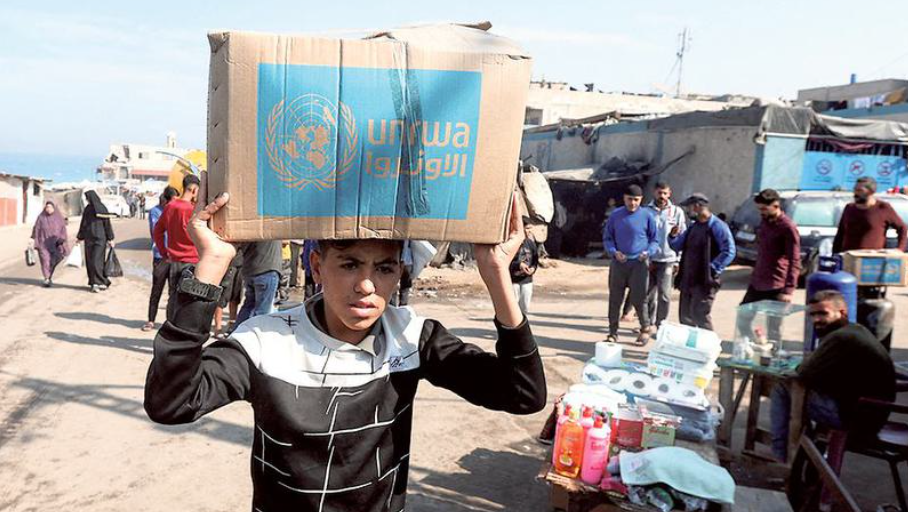
- Education: The closure of UNRWA schools would severely impact the education of hundreds of thousands of Palestinian children, leading to increased dropout rates and limiting future opportunities.
- Healthcare: UNRWA’s health clinics play a critical role in providing medical care to Palestinian refugees. The loss of these services could result in deteriorating health outcomes, particularly for vulnerable populations such as women and children.
- Food Security: Many Palestinian refugees rely on UNRWA for food assistance. The agency’s withdrawal would exacerbate food insecurity and malnutrition among displaced families, particularly in Gaza, where the humanitarian situation is already dire.
Long-Term Consequences
The long-term consequences of severing ties with UNRWA could be profound. The agency has been a crucial provider of stability and support for Palestinian refugees for decades. Its dissolution or significant reduction in services could lead to increased desperation, social unrest, and further destabilization in the region.
Potential Alternatives
While Israeli officials advocate for alternative forms of assistance, such as direct aid to Palestinian communities, the logistics and feasibility of such approaches remain uncertain. The complexity of the Israeli-Palestinian conflict requires a nuanced understanding of the needs of Palestinian refugees and the socio-political dynamics at play.
Reactions from Stakeholders
Palestinian Authority (PA)
The Palestinian Authority has condemned Israel’s decision, viewing it as an attack on the rights of Palestinian refugees. Palestinian leaders argue that severing ties with UNRWA undermines international support for Palestinian rights and exacerbates the humanitarian crisis.
International Community
The international community’s reaction has been mixed. Some countries have expressed concern about the potential impact on Palestinian refugees and the broader peace process. Humanitarian organizations have urged Israel to reconsider its decision, emphasizing the importance of UNRWA in providing vital services to vulnerable populations.
- United Nations: UN Secretary-General António Guterres has reiterated the importance of UNRWA in addressing the needs of Palestinian refugees and has called for continued support for the agency.
- Human Rights Organizations: Various human rights organizations have criticized Israel’s decision, warning that it could lead to further humanitarian suffering and increased tensions in the region.
Reactions from Israeli Officials
Israeli officials have defended the decision to sever ties, framing it as a necessary step toward accountability and reform. They argue that international organizations must ensure their operations do not contribute to violence or perpetuate the conflict.
The Future of Humanitarian Aid in the Region
Challenges Ahead
The severing of ties with UNRWA presents significant challenges for humanitarian aid delivery in the region. The potential for increased instability, coupled with the already fragile situation in Gaza and the West Bank, underscores the urgent need for a comprehensive approach to humanitarian assistance.
Need for International Cooperation
Moving forward, international cooperation will be essential in addressing the humanitarian needs of Palestinian refugees. A collaborative approach involving various stakeholders, including humanitarian organizations, donor countries, and the Palestinian Authority, may be necessary to ensure that aid reaches those in need.
Exploring Alternatives
As discussions about alternatives to UNRWA gain traction, it will be crucial to assess the feasibility and effectiveness of such approaches. Any alternative framework must prioritize the rights and needs of Palestinian refugees while fostering long-term stability in the region.
Conclusion
Israel’s decision to sever ties with UNRWA marks a pivotal moment in the ongoing Israeli-Palestinian conflict and raises critical questions about the future of humanitarian aid for Palestinian refugees. The immediate and long-term implications of this decision could profoundly impact the lives of millions of Palestinians who rely on UNRWA for essential services.
As the international community grapples with the fallout from this decision, it is imperative to explore alternative avenues for humanitarian assistance that prioritize the needs of Palestinian refugees while promoting peace and stability in the region. The complex interplay of politics, humanitarianism, and the quest for a lasting resolution to the Israeli-Palestinian conflict will continue to shape the future of the region and its inhabitants. ALSO READ:- “Lebanon’s Toll Surpasses 3,000 in the 13-Month Israel-Hezbollah Conflict: A Nation Caught in the Crossfire”