





1. Introduction
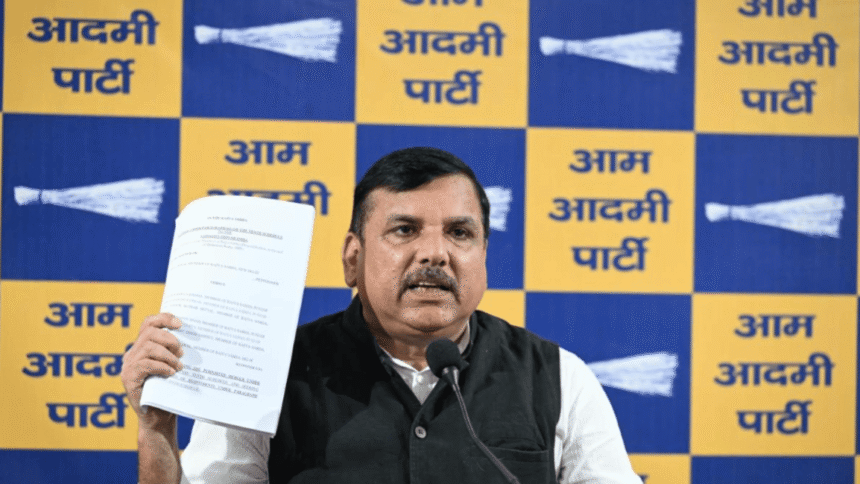
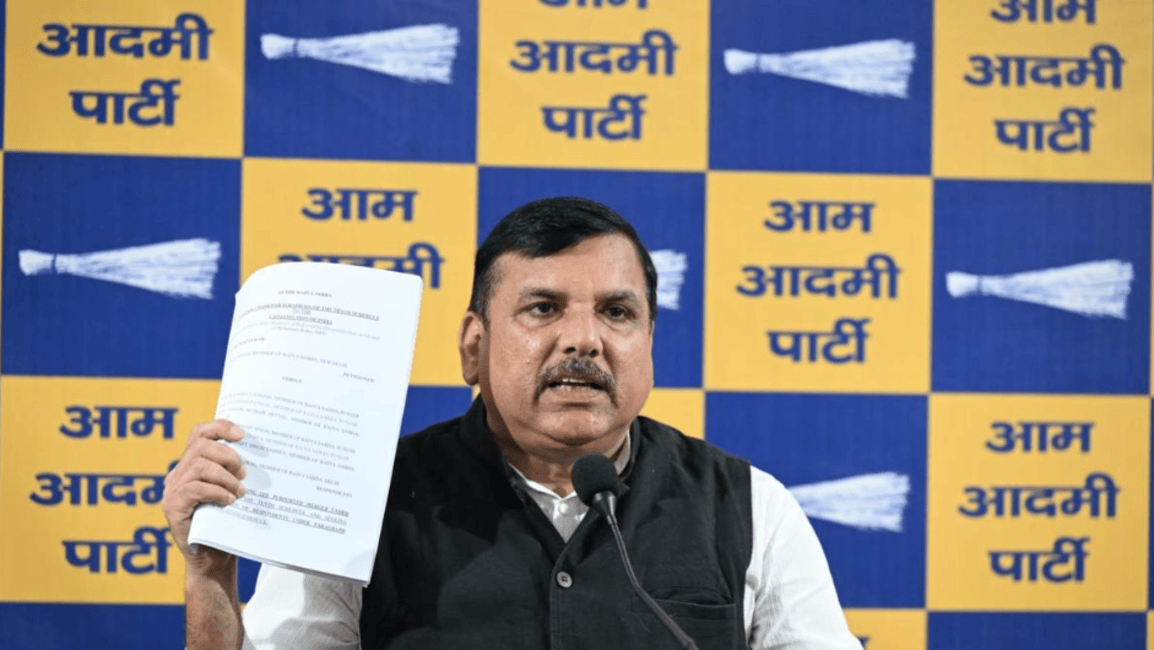
AAP Seeks Disqualification a significant political development, the Aam Aadmi Party (AAP) has taken a bold and controversial step by seeking the disqualification of its own senior leader Raghav Chadha along with other Members of Parliament (MPs) accused of defection. The party has formally submitted a plea before the appropriate authority, invoking provisions of the anti-defection law.
This move has triggered widespread debate across political circles, raising important questions about party discipline, internal dissent, and the interpretation of constitutional provisions. As Indian politics continues to evolve, such developments underline the fragile balance between individual freedom and party loyalty within a democratic framework.
2. Background of the Controversy
The controversy stems from allegations that certain AAP MPs deviated from the party’s official line on key political and legislative matters. According to party leadership, these MPs engaged in actions that could be interpreted as defection, either by:
- Acting against party directives
- Maintaining proximity with rival political parties
- Expressing dissent in ways that undermine party unity
 FORE MORE INFORMATION
The inclusion of Raghav Chadha in the list has particularly drawn attention, given his prominence as one of AAP’s most recognizable and articulate leaders.
3. The Plea: What AAP Has Demanded
AAP has submitted a formal petition seeking the disqualification of the concerned MPs under the Tenth Schedule of the Indian Constitution, commonly referred to as the anti-defection law.
In its plea, the party has reportedly argued that:
- The MPs have violated the party whip
- Their actions amount to voluntary abandonment of party membership
- Such conduct threatens the stability and ideological coherence of the party
The plea has been submitted to the presiding authority—likely the Chairman of the Rajya Sabha in the case of Upper House MPs—who will now examine the matter.
4. Why Raghav Chadha’s Name Matters
Raghav Chadha’s inclusion in the plea has added a dramatic twist to the situation. Known for his articulate speeches and strategic role within AAP, Chadha has been a key figure in expanding the party’s national footprint.
The allegations against him include:
- Diverging from party positions on critical issues
- Alleged lack of coordination with party leadership
- Statements or actions perceived as contrary to party interests
However, supporters argue that dissent within a party should not be equated with defection, and that Chadha’s actions may fall within the democratic right to express differing opinions.
5. Understanding the Anti-Defection Law
The anti-defection law was introduced in 1985 through the 52nd Amendment to the Constitution, adding the Tenth Schedule. Its primary objective is to curb political defections motivated by personal gain.
Key Provisions:
- A legislator can be disqualified if they voluntarily give up membership of their party
- Voting against the party whip without prior permission can lead to disqualification
- A merger involving at least two-thirds of members of a party is considered valid
The law aims to ensure stability in governments but has often been criticized for restricting legitimate dissent.
6. Political Implications for AAP
AAP’s decision to pursue disqualification proceedings reflects a calculated political strategy. The party appears to be sending a strong message about discipline and unity.
Possible Objectives:
- Reinforce internal discipline
- Deter future dissent or rebellion
- Maintain a cohesive public image
At the same time, this move carries risks. It may expose internal divisions and provide ammunition to political opponents.
7. Reactions from Opposition Parties
Opposition parties have been quick to react, with many criticizing AAP’s move as excessive and politically motivated.
Key Criticisms:
- Suppression of dissent: Critics argue that AAP is attempting to silence internal voices
- Political vendetta: Some see the move as an attempt to sideline influential leaders
- Double standards: Opponents claim AAP is contradicting its earlier stance on transparency and democracy
These reactions highlight the broader political stakes involved in the controversy.
8. Legal Process and What Lies Ahead
Once a plea for disqualification is submitted, the process follows a structured path:
- Examination by Presiding Officer: The Chairman or Speaker reviews the petition
- Notice to Accused MPs: They are given an opportunity to respond
- Evaluation of Evidence: Both sides present their arguments
- Final Decision: The authority decides whether disqualification is warranted
This process can take weeks or even months, depending on the complexity of the case.
9. Possible Outcomes
The case could unfold in several ways:
(i) Disqualification of MPs
If the allegations are proven, the MPs could lose their seats, AAP Seeks Disqualification significantly impacting their political careers.
(ii) Rejection of the Plea
If the evidence is insufficient, the plea may be dismissed, AAP Seeks Disqualification potentially embarrassing AAP.
(iii) Political Reconciliation
Behind-the-scenes negotiations could lead to a compromise, avoiding a formal verdict.
10. Broader Impact on Indian Politics
This episode is not just about AAP—it has implications for the entire political landscape.
- It may prompt other parties to tighten internal discipline
- It could reignite debates on the scope and limitations of the anti-defection law
- It highlights the tension between party control and individual autonomy
Such cases often set precedents that influence future political conduct.
11. Historical Context of Defection Cases
India has witnessed numerous high-profile defection cases over the years, including:
- Government collapses in states like Karnataka and Madhya Pradesh
- Political upheaval in Maharashtra
- Frequent party-switching in smaller states like Goa and Arunachal Pradesh
 FORE MORE INFORMATION
These instances demonstrate how defection can alter political equations overnight.
12. Expert Opinions
Political analysts and constitutional experts are divided on the issue.
- Some view AAP’s move as necessary to uphold discipline
- Others argue that the anti-defection law is being stretched beyond its intended purpose
- There is a growing consensus that reforms may be needed to balance stability with democratic freedom
13. Conclusion
AAP’s plea seeking the disqualification of Raghav Chadha and other alleged defecting MPs marks a pivotal moment in contemporary Indian politics. It underscores the challenges political parties face in maintaining unity while accommodating diverse viewpoints.
As the case progresses, AAP Seeks Disqualification it will test not only the strength of AAP’s internal structure but also the robustness of India’s constitutional mechanisms. The outcome will likely have far-reaching consequences, influencing party dynamics, legal interpretations, and electoral strategies in the years to come. ALSO READ:-Turnout Increases in Tamil Nadu Follow Spatial Patterns: A Detailed Analysis of Voting Trends 2026