




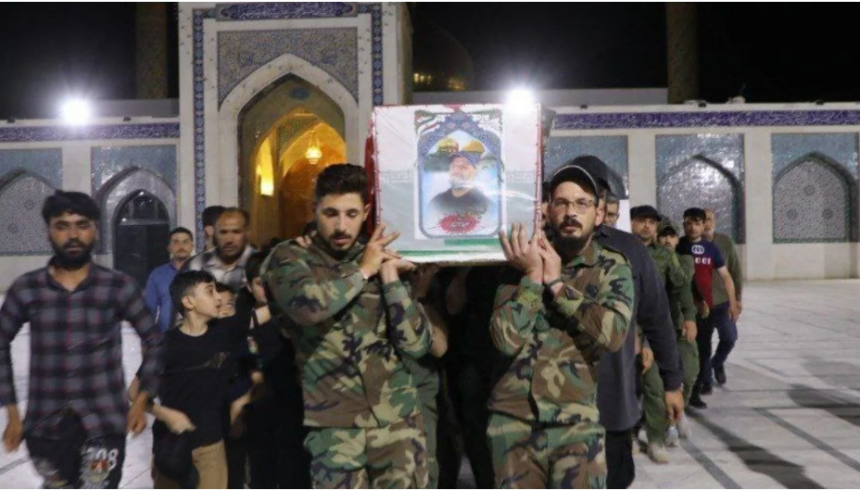
Iranian Military Adviser Middle East continues to be a volatile region marked by geopolitical tensions and military conflicts, with the latest developments highlighting the intricate web of alliances and enmities that shape the landscape. The death of an Iranian military adviser in Syria, reportedly days after an Israeli strike, has ignited further concerns regarding the escalating confrontations between these nations and their implications for regional stability.
Background of Iranian Military Presence in Syria
Iran has maintained a significant military presence in Syria since the outbreak of the Syrian civil war in 2011. The Iranian government, seeing the conflict as an opportunity to extend its influence in the region, has provided critical support to President Bashar al-Assad’s regime through military advisors, arms, and funding. Iran’s involvement in Syria is seen as part of its broader strategy to establish a “Shia Crescent,” connecting Tehran to Beirut via Baghdad and Damascus.
The Iranian military advisers play a crucial role in training Syrian forces and coordinating with allied militias, including Hezbollah. Their presence has been a major point of contention for Israel, which views the Iranian foothold in Syria as a direct threat to its national security. Over the years, Israel has conducted numerous airstrikes against Iranian positions in Syria, targeting weapons depots, military bases, and personnel to disrupt what it perceives as a growing Iranian military infrastructure along its borders.
Details of the Israeli Strike
The recent Israeli strike that reportedly led to the death of the Iranian military adviser, identified by various sources as General Mohammad Khoshnavaz, occurred in the outskirts of Damascus. Although details of the operation remain limited, reports suggest that the strike targeted a convoy carrying high-ranking military officials and equipment associated with the Islamic Revolutionary Guard Corps (IRGC). 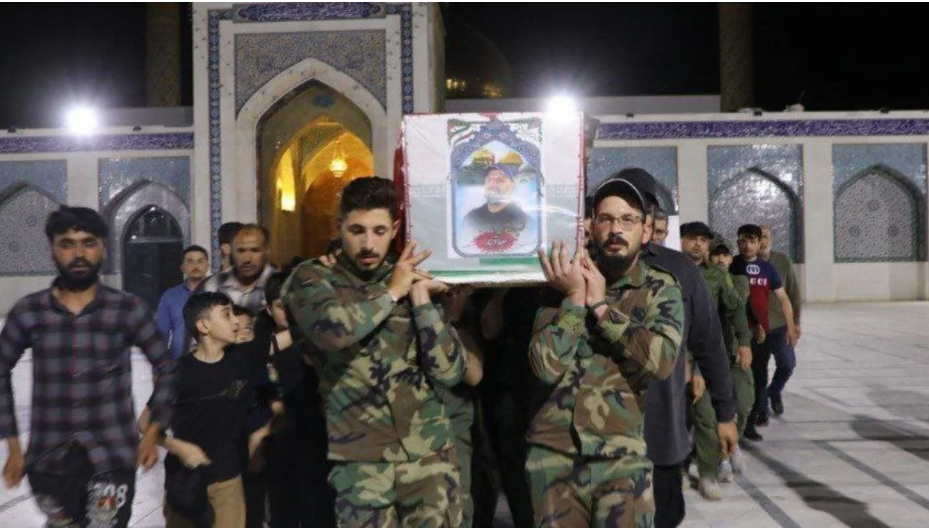 For the more information click on this link
Israeli sources indicated that the operation was preemptive, aimed at thwarting imminent threats posed by Iranian assets in the region. The Israeli Defense Forces (IDF) have consistently maintained that they will take action against any military buildup that threatens their security, particularly in proximity to their borders.
Iranian Response and Implications
The death of General Khoshnavaz has elicited strong reactions from Iranian officials, who condemned the Israeli strike as an act of aggression. Iranian state media reported that the general was a key figure in Iran’s military strategy in Syria and emphasized the need for retaliation. Iranian leaders, including those from the IRGC, have vowed to continue supporting the Syrian government despite the risks involved.
The broader implications of this incident are significant. It underscores the fragility of the current geopolitical situation in the Middle East, where proxy battles are fought through various means. Iran’s continued military involvement in Syria, coupled with Israel’s aggressive stance, creates a dangerous cycle of violence that could escalate into a larger conflict.
Regional and International Reactions
The news of the Iranian adviser’s death and the circumstances surrounding it have drawn reactions from various regional and international actors. Countries such as Russia and Turkey, which have their interests in Syria, have called for de-escalation and restraint among the involved parties. Russia, which has been a key ally of the Assad regime, has historically sought to mediate tensions between Israel and Iran, emphasizing the need for stability in the region.
At the same time, the United States, which has consistently opposed Iranian influence in Syria, may view the strike as a reaffirmation of Israel’s right to defend itself against perceived threats. U.S. officials have previously indicated support for Israel’s operations aimed at curtailing Iranian entrenchment in Syria, reflecting a shared concern over Tehran’s regional ambitions.
Escalation of Military Operations
The death of the Iranian military adviser could lead to an escalation in military operations from both sides. Iran may seek to retaliate by targeting Israeli assets, either directly through military means or by leveraging its network of proxies in the region, including Hezbollah in Lebanon and various militia groups in Iraq and Syria.
On the Israeli side, the IDF is likely to ramp up its operations in Syria to preempt any retaliatory actions from Iran. Israel has frequently conducted airstrikes in Syria under the pretext of preventing weapons transfers to Hezbollah, and this incident may provide a further justification for continued military action.
The Broader Context of the Syrian Civil War
The situation surrounding the Iranian military adviser’s death cannot be viewed in isolation from the broader context of the Syrian civil war. The conflict, which has resulted in hundreds of thousands of deaths and millions of displaced persons, remains unresolved. Various factions, including the Syrian government, opposition groups, and Kurdish forces, continue to vie for control over territory and influence.
Iran’s involvement in Syria is also part of its broader struggle for regional dominance, often clashing with the interests of Sunni-majority states such as Saudi Arabia and the UAE. The sectarian nature of the conflict complicates the situation, as Iran aligns itself with Shia groups and movements, while its adversaries seek to counter its influence.  For the more information click on this link
The Risk of a Larger Conflict
As tensions escalate between Iran and Israel, the risk of a larger conflict looms. Both countries are aware of the potential consequences of military escalation, but their respective strategies may lead them to miscalculate the situation. An all-out conflict could have catastrophic implications for the region, potentially drawing in other nations and leading to widespread instability.
In addition, the involvement of external powers, including the United States and Russia, further complicates the situation. Any military engagement could lead to unintended consequences, especially if other countries choose to intervene or support one side over the other.
The Role of Diplomacy
In light of the rising tensions and the threat of escalation, the need for diplomatic engagement becomes increasingly urgent. Although past attempts at negotiations have faced significant challenges, finding common ground and promoting dialogue is essential to de-escalate tensions.
International organizations, including the United Nations, could play a role in facilitating dialogue between Iran, Israel, and other stakeholders in the region. Building trust and addressing the underlying issues contributing to the conflict are crucial for achieving a sustainable resolution.
Conclusion: A Volatile Landscape
The death of the Iranian military adviser in Syria serves as a stark reminder of the ongoing volatility in the region. The complex interplay of military strategies, regional rivalries, and external influences continues to shape the dynamics of the Middle East. As Iran and Israel navigate this treacherous landscape, the potential for conflict remains high, with significant implications for the broader international community.
The coming days and weeks will be critical in determining whether tensions will escalate or if there is room for diplomatic engagement. As the situation unfolds, all eyes will be on Iran, Israel, and their respective allies, who hold the power to either deepen the conflict or work towards a more stable and peaceful resolution. ALSO READ:- Been Waiting for This Moment for a Long Time: Nigar Sultana on Leading Bangladesh Women’s Cricket to New Heights 2024
В обзорной статье вы найдете собрание важных фактов и аналитики по самым разнообразным темам. Мы рассматриваем как современные исследования, так и исторические контексты, чтобы вы могли получить полное представление о предмете. Погрузитесь в мир знаний и сделайте шаг к пониманию!
Получить дополнительные сведения – https://quick-vyvod-iz-zapoya-1.ru/