


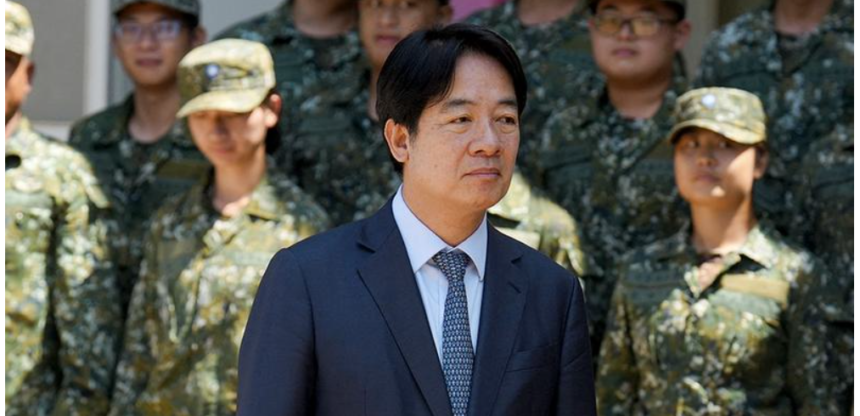
China bold and uncompromising statement, Taiwan’s President Tsai Ing-wen has firmly reiterated her government’s stance on Taiwan’s sovereignty, declaring that it is “impossible” for China to be regarded as the motherland by Taiwan. Tsai’s statement comes at a critical juncture in cross-strait relations, where rising tensions and increased Chinese military maneuvers have fueled the debate over Taiwan’s future. As China continues to exert pressure on the island with diplomatic isolation and the threat of force, President Tsai’s words resonate with a long-standing desire among many Taiwanese to safeguard their unique identity and democratic values.
This assertion is not just a moment of defiance; it represents the complex historical, cultural, and political landscape that has shaped Taiwan’s current position in the world. For decades, the question of Taiwan’s status has been a central issue not only in East Asia but also in global geopolitics, involving major powers like the United States and regional neighbors like Japan and South Korea.
The Historical Context
Taiwan’s history is integral to understanding the current impasse. The island’s indigenous people lived there for thousands of years before the arrival of Chinese settlers in the 17th century. During the Qing Dynasty, Taiwan was incorporated into China’s empire, but it was ceded to Japan in 1895 after China’s defeat in the First Sino-Japanese War. Under Japanese rule, Taiwan developed its infrastructure and industries but also suffered from colonial oppression.
When Japan lost World War II, Taiwan was returned to Chinese control. However, the Chinese Civil War (1945–1949) between the Chinese Nationalist Party (KMT) and the Chinese Communist Party (CCP) drastically altered the situation. The KMT, led by Chiang Kai-shek, retreated to Taiwan after their defeat by the communists, who established the People’s Republic of China (PRC) on the mainland. Chiang’s government continued to claim sovereignty over all of China, while the PRC declared Taiwan as a breakaway province. This standoff, often termed the “One China” policy, remains unresolved to this day.
Taiwan evolved into a democratic society with free elections, whereas mainland China developed under a one-party communist system. Over time, the gap between Taiwan’s democratic values and China’s authoritarian rule has widened, intensifying Taiwan’s desire to maintain its independence.
Tsai Ing-wen’s Presidency and Stance on Sovereignty
Since taking office in 2016, President Tsai Ing-wen of the Democratic Progressive Party (DPP) has been a strong advocate for Taiwan’s independence and its democratic system. Tsai has refused to endorse the “1992 Consensus,” a tacit understanding between China and Taiwan that both sides belong to “one China,” though ambiguously defined. Her refusal to accept this consensus has angered Beijing, which views it as a cornerstone for cross-strait dialogue.
President Tsai’s recent declaration that China cannot be Taiwan’s motherland is deeply rooted in the belief that Taiwan’s identity has diverged significantly from that of mainland China. Tsai has long emphasized that Taiwan is a sovereign state, with its own government, military, and distinct culture. During her tenure, she has sought to strengthen Taiwan’s international presence, pushing for greater recognition of Taiwan as a de facto independent nation, even though only a few countries formally recognize it as such.
Her remarks reflect a broader sentiment among the Taiwanese population. Polls show that most Taiwanese people do not identify with mainland China and prefer to maintain the status quo, with some supporting outright independence. The younger generation, in particular, sees Taiwan as a separate entity and is largely resistant to any form of unification with China, especially under the terms that Beijing proposes—those modeled after the “One Country, Two Systems” framework used for Hong Kong, which many Taiwanese view as a failed experiment.
Rising Tensions in the Taiwan Strait
Tsai’s statement comes amid heightened tensions in the Taiwan Strait. The Chinese government has increased military activity near Taiwan, conducting frequent air and naval exercises in a show of force aimed at intimidating the island. Beijing has also ramped up diplomatic pressure, poaching Taiwan’s few remaining formal allies and blocking its participation in international organizations like the World Health Organization (WHO) and the United Nations (UN). 
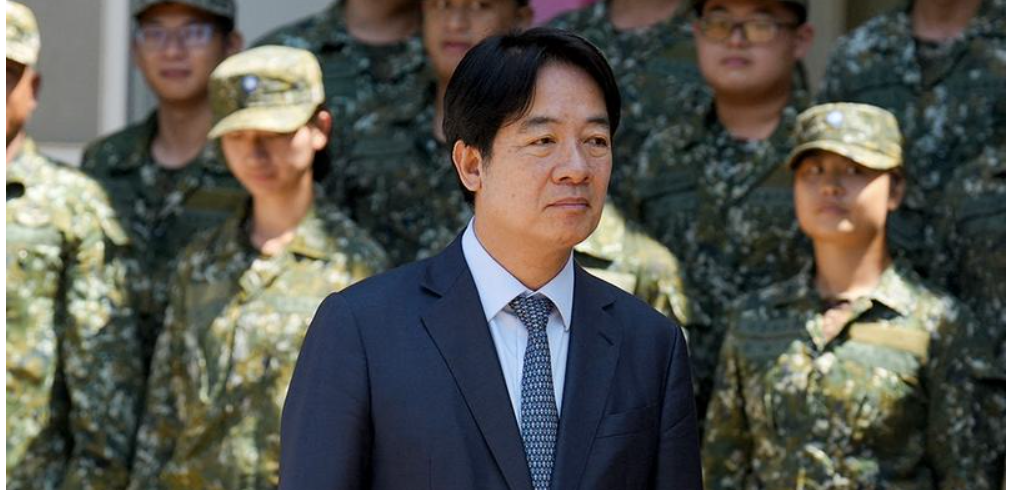
China’s President Xi Jinping has made it clear that “reunification” with Taiwan is a key national goal, and he has not ruled out the use of force to achieve it. In his speeches, Xi has framed Taiwan as an inseparable part of China and warned that any move toward formal independence could trigger military intervention. To China, Taiwan represents not only a piece of territory but also a symbol of national pride and the final chapter in the long process of unifying the country after the turbulent 20th century.
However, Taiwan has not stood idle in the face of these threats. Under Tsai’s leadership, Taiwan has bolstered its defense capabilities, modernizing its military and deepening ties with strategic partners, most notably the United States. Washington has been a long-time supporter of Taiwan’s security, providing arms and military training under the Taiwan Relations Act, which obliges the U.S. to assist Taiwan in maintaining its self-defense. U.S. naval vessels frequently patrol the Taiwan Strait, signaling American commitment to maintaining stability in the region and deterring potential Chinese aggression.
The Role of the United States
The U.S. plays a pivotal role in the cross-strait dynamic. Although Washington officially adheres to the “One China” policy, it has maintained strong unofficial ties with Taiwan. Recent U.S. administrations, both under Donald Trump and Joe Biden, have taken a more assertive stance on Taiwan, viewing it as a crucial ally in the Indo-Pacific region. The U.S. government has repeatedly emphasized its commitment to Taiwan’s defense, and high-level arms sales to Taiwan have continued despite Chinese protests.
President Tsai’s declaration that it is impossible for Taiwan to consider China as its motherland echoes American concerns about Beijing’s growing assertiveness. The U.S. views Taiwan not only as a strategic partner but also as a symbol of democracy in a region where authoritarianism is on the rise, particularly with China’s growing influence. 
However, the U.S. also walks a delicate diplomatic tightrope. While it supports Taiwan’s self-defense and autonomy, it does not officially recognize Taiwan as an independent country, out of concern that such a move would provoke China into taking military action. U.S. policy is thus focused on maintaining the status quo, deterring Chinese aggression while preventing Taiwan from making a formal declaration of independence.
Taiwan’s Growing Global Support
Despite the lack of formal diplomatic recognition from most countries, Taiwan has gained growing international support, particularly in light of its response to the COVID-19 pandemic and its resilience in the face of Chinese pressure. Taiwan’s effective handling of the pandemic, which included early interventions and transparent health measures, has drawn global admiration. Many countries, including those in the European Union and Asia-Pacific, have advocated for Taiwan’s participation in international organizations, especially in health-related bodies such as the WHO.
Moreover, Taiwan’s thriving democracy has garnered respect from countries that value democratic governance and human rights. President Tsai’s administration has strengthened ties with like-minded nations, such as Japan, Australia, and several European countries, which have voiced their support for Taiwan’s inclusion in the global community.
Tsai’s firm stance on Taiwan’s independence resonates with these international partners, many of whom have grown increasingly wary of China’s expanding influence. By positioning Taiwan as a bastion of democracy in the Asia-Pacific region, Tsai has framed the island’s struggle not just as a bilateral issue between Taiwan and China but as part of a broader global fight to defend democratic values.
The Future of Cross-Strait Relations
President Tsai Ing-wen’s statement highlights the deep and widening divide between Taiwan and China. Her assertion that it is “impossible” for China to be Taiwan’s motherland reflects a growing consensus in Taiwan that the island’s future should be determined by its people, not dictated by Beijing. This sentiment is especially strong among younger generations who have grown up in a democratic society and feel little connection to the mainland.
While Tsai’s remarks reinforce Taiwan’s resolve to maintain its sovereignty, they also underscore the precarious nature of cross-strait relations. Beijing is unlikely to soften its stance on Taiwan, and as long as China views Taiwan as an inseparable part of its territory, the potential for conflict remains.
The risk of miscalculation or unintended escalation is ever-present, particularly with increased military activity in the Taiwan Strait. Analysts warn that any attempt by China to forcibly reunify Taiwan would trigger a major geopolitical crisis, likely involving the U.S. and other regional powers. Such a scenario would not only devastate Taiwan but also have far-reaching consequences for global trade, security, and the balance of power in the Indo-Pacific.
Conclusion
President Tsai Ing-wen’s assertion that China can never be Taiwan’s motherland is a reflection of Taiwan’s determination to preserve its sovereignty and democratic way of life. Her leadership has strengthened Taiwan’s international standing, even as China continues to isolate the island diplomatically and threaten it militarily. The future of Taiwan remains uncertain, but Tsai’s unwavering stance has made it clear that the Taiwanese people, not external forces, will decide their destiny.
As the world watches this evolving situation, one thing is certain: Taiwan’s struggle for recognition and autonomy is not just about geography but about safeguarding democratic values in an increasingly authoritarian world. ALSO READ:- Meta Introduces Movie Gen Text-to-Video-and-Sound Generator 2024