



Introduction: A Diplomatic Dispute Captures Global Attention
Canada PM Mark Carney has denied claims that he reversed or softened his remarks made during a high-profile speech at the World Economic Forum (WEF) in Davos during a recent phone call with U.S. President Donald Trump. Carney’s comments, which criticized the erosion of the international rules-based order, ignited a diplomatic row with the United States, leading to conflicting accounts of what was actually said in a subsequent conversation between the two leaders.
This episode not only highlights rising tensions in U.S.–Canada relations, but also underscores broader global anxieties over shifting trade policies, geopolitical alliances, Canada PM Mark Carney and the future of multilateral cooperation. What began as a speech to global elites in Switzerland has escalated into a high-stakes clash between neighboring powers.
Davos Speech: A Provocative Call Amid Global Shifts
Carney delivered a keynote address at the 56th World Economic Forum held in Davos, Switzerland, on January 20, 2026. The speech, titled “Principled and Pragmatic: Canada’s Path,” earned international attention for its critique of the so-called “rules-based international order” — a term long associated with U.S. leadership since the end of World War II.
In the address, Carney argued that the established structure of global cooperation has been fractured by recent unilateral actions and economic coercion by major powers, Canada PM Mark Carney implicitly pointing to U.S. policies under President Trump. He urged “middle powers” like Canada to collaborate with each other and like-minded nations to craft new systems of cooperation that reflect today’s realities.
The speech struck a chord with many around the world who view global institutions as strained, but it clearly struck a nerve in Washington. According to reports, Trump took offense to Carney’s assertions, Canada PM Mark Carney prompting a sharp response from the U.S. president.
Trump’s Reaction: From Praise to Threats
After Carney’s speech, President Trump publicly criticized the Canadian leader’s remarks, Canada PM Mark Carney claiming that Canada “only existed because of the United States.” The comment was widely interpreted as an attempt to undercut Carney’s message of Canadian self-determination.
Tensions further escalated when Trump threatened to impose 100% tariffs on Canadian imports if Ottawa pursued a trade deal with China — a stark indication of how delicate the U.S.–Canada economic relationship has become. Trump’s warning was widely covered in the international press as a symbol of rising protectionism and geo-economic rivalry.
Amid these developments, U.S. Treasury Secretary Scott Bessent told Fox News that Carney had “very aggressively” walked back elements of his Davos speech during a phone call with Trump. This claim touched off further controversy and set the stage for a public denial by Carney. 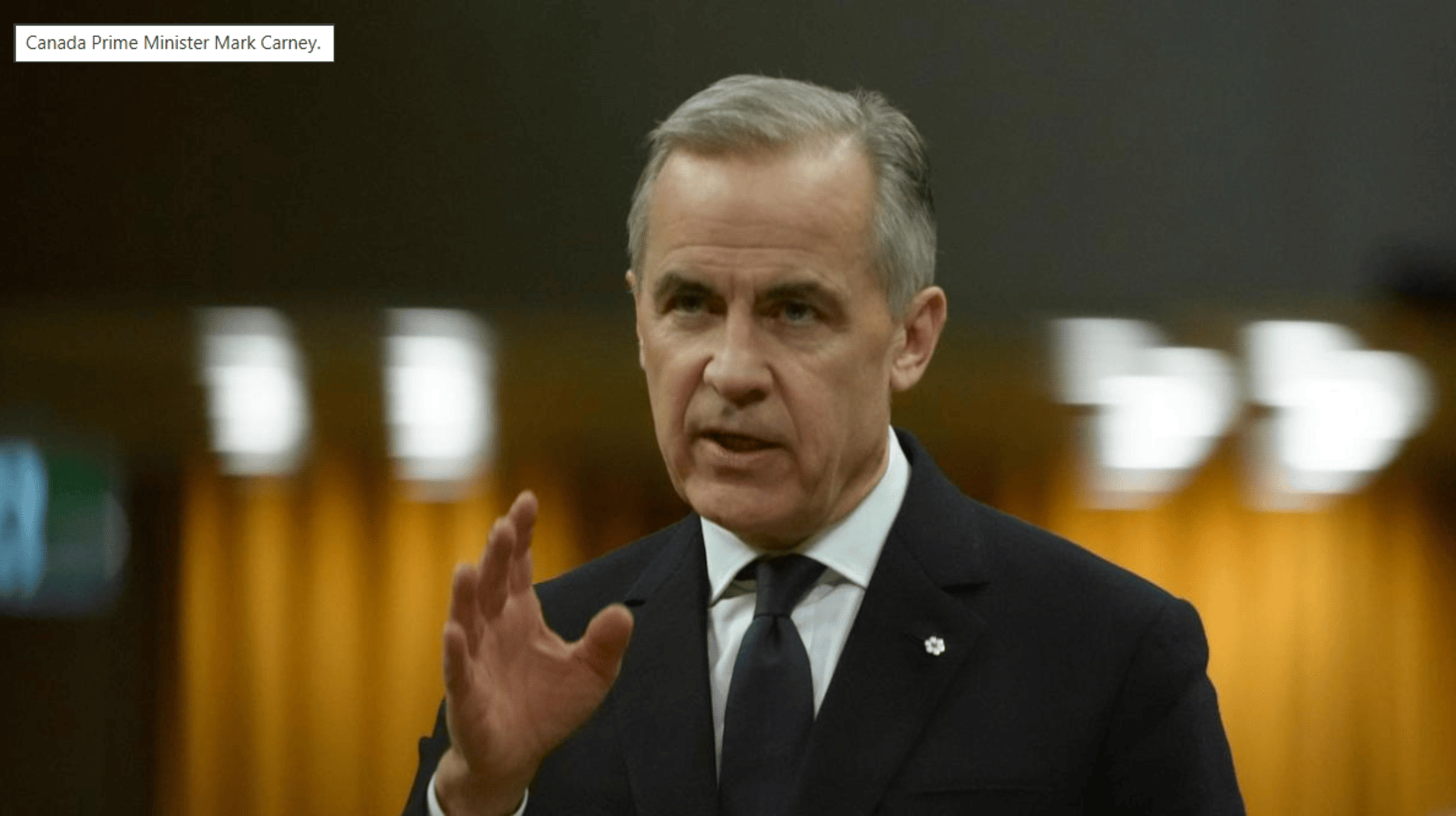 watch video for more info
The Call That Sparked Conflicting Reports
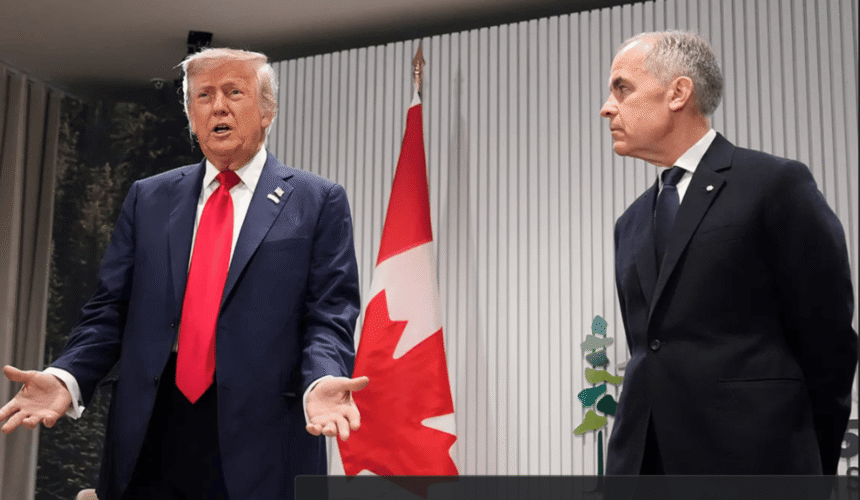
On January 26, 2026, Prime Minister Carney and President Trump spoke by phone for what was described as a broad-ranging conversation touching on Arctic security, Canada PM Mark Carney trade, Ukraine, Venezuela, Canada PM Mark Carney and other key international issues.
Following that call, U.S. Treasury Secretary Scott Bessent appeared on television and said Carney had “very aggressively” walked back some of his most controversial remarks from Davos. Bessent’s account suggested that Carney had toned down his language and signaled a softer Canadian stance in the face of American economic pressure.
However, within hours, Carney forcefully rebutted that narrative. Speaking to reporters in Ottawa, Canada PM Mark Carney the Canadian prime minister said, “To be absolutely clear, and I said this to the president — I meant what I said in Davos.” He directly denied that he had backtracked on any part of his original speech.
Carney’s Clarification: Standing by His Words
Carney’s statement was unequivocal. When asked if he had walked back his criticism of the traditional global rules-based order, he simply replied “No.” He repeated that Canada is responding to changes in U.S. trade policy by seeking to diversify its trade relationships “12 new deals, four continents, in six months,” and by strengthening its existing partnership with the U.S. under the US–Mexico–Canada Agreement (USMCA).
Carney emphasized that his Davos speech was not just rhetoric — it reflected a strategic pivot in Canadian foreign policy aimed at reducing overreliance on the United States, which currently accounts for approximately 70% of Canadian exports. By broadening trade across Asia, Europe, Africa, and Latin America, Canada PM Mark Carney Carney suggested Canada can better navigate the evolving global landscape.
Carney also highlighted that his diplomatic engagement with Trump was constructive. He said he explained Canada’s trade arrangements with countries like China not as a threat to American interests but as part of a broader effort to secure economic prospects for Canadians. 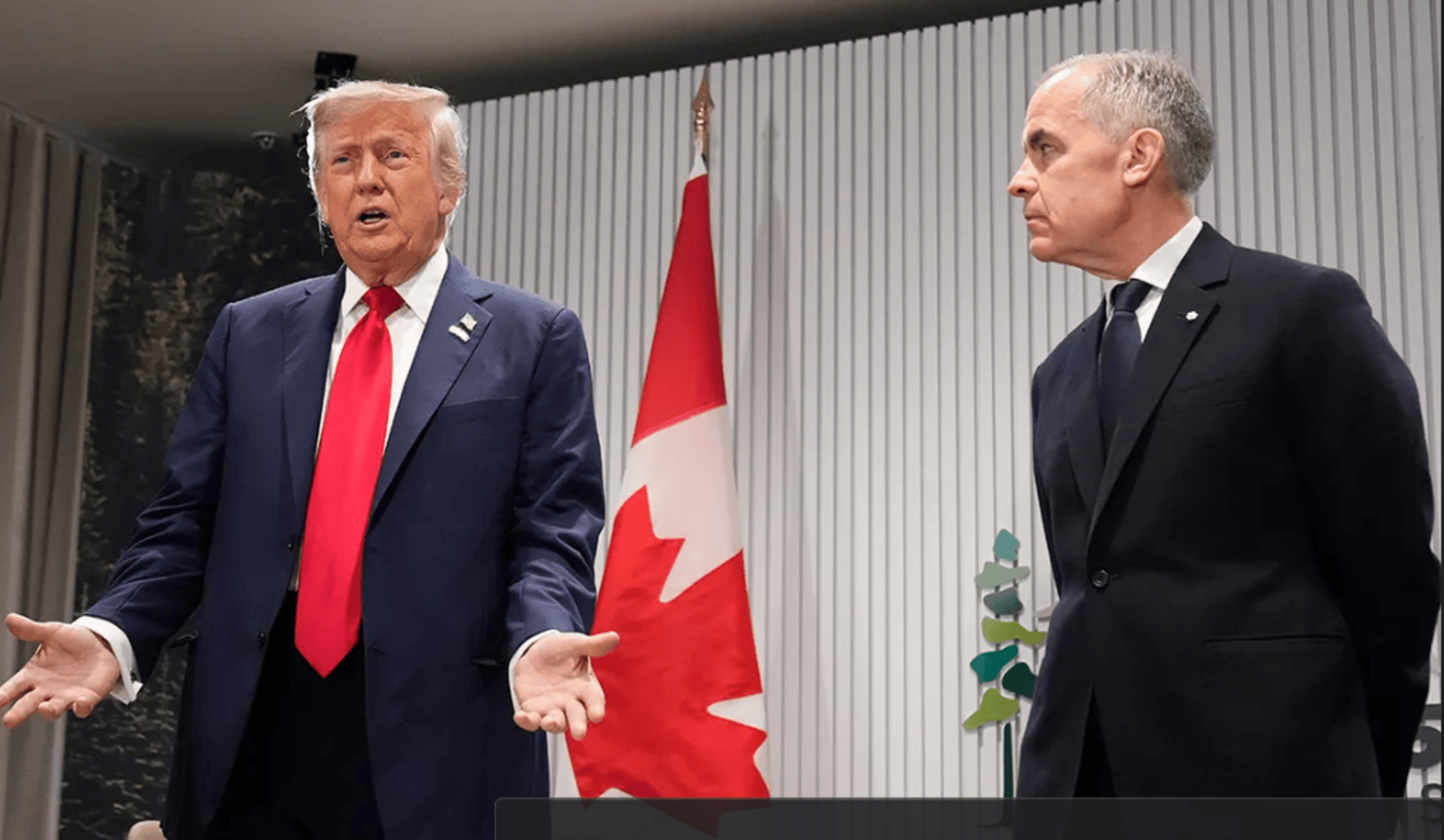 watch video for more info
U.S.–Canada Trade and the Future of USMCA
Underlying much of the friction between Ottawa and Washington is the future of the USMCA, the three-way trade agreement between the United States, Mexico, and Canada that replaced NAFTA. The pact is up for review later this year, Canada PM Mark Carney and negotiations are expected to be challenging amid sharply differing trade philosophies in Ottawa and Washington.
Carney’s critics in the U.S. argue that he exaggerates the extent to which Canada can diversify away from its largest trading partner. Trump, for his part, has publicly questioned the relevance of USMCA and suggested that Canada’s economic destiny is inextricably linked to Washington.
Yet Carney insists that Canada’s upcoming review of the trade agreement provides an opportunity to recalibrate ties and reinforce cooperation with the U.S. He noted that Ottawa and Washington share deep economic, Canada PM Mark Carney cultural, and security connections that neither side should take for granted.
Public and Political Reactions: Domestic and International
In Canada, Carney’s stance has resonated with many who view his leadership as principled and assertive. A recent poll showed a rise in Carney’s popularity following the Davos speech and subsequent dispute with Trump, indicating that many Canadians appreciate his defense of national interests and his willingness to challenge U.S. dominance.
Internationally, analysts have noted that the saga reflects broader concerns about shifting global power dynamics. Middle powers like Canada increasingly feel the need to adapt to a multipolar world, Canada PM Mark Carney where an overreliance on one superpower can pose economic and political risks. Carney’s call for diversified alliances appears to have struck a chord with leaders in Europe and parts of Asia who are wary of unilateralism.
Political commentators in the U.S. have been divided. Supporters of Trump view Carney’s remarks as unnecessarily provocative and potentially damaging to a strong North American alliance. Critics counter that the American response — including threats of steep tariffs — may be overblown and reflective of a broader trend toward protectionism and isolationism.
Tariff Threats and the Canada–China Trade Dynamic
Another element intensifying the diplomatic row is the burgeoning Canada–China trade relationship. Trump’s 100% tariff threat was explicitly linked to concerns that Canada might pursue a comprehensive free trade agreement with China — a move that could disrupt established North American trade patterns.
Carney has publicly stated that Canada has no intention of negotiating a full-blown free trade agreement with China. Instead, Ottawa’s recent agreements with Beijing are narrow and designed to address specific tariff issues, not to supplant the U.S. as Canada’s principal economic partner.
Despite this, Trump’s rhetoric has been sharply critical, Canada PM Mark Carney framing any closer ties between Ottawa and Beijing as a strategic threat to U.S. interests. This has complicated diplomatic engagements and added a geopolitical dimension to what might otherwise be routine trade discussions.
Implications for International Order and Future Cooperation
The clash over Carney’s comments and their supposed retraction underscores deeper questions about the future of global governance. Many international leaders worry that the decades-old architecture of institutions and trade agreements could be eroded if major powers fail to uphold the rules they once championed.
Carney’s emphasis on “middle powers” banding together reflects a broader trend of nations striving for autonomy in an increasingly unpredictable world. Whether such efforts will bear fruit remains uncertain, Canada PM Mark Carney but Carney’s articulation of a new cooperative framework suggests that traditional alliances are being reimagined.
Conclusion: A Defining Moment for Ottawa-Washington Relations
In denying that he retracted his remarks during his call with President Trump, Mark Carney has reaffirmed his commitment to the message he delivered in Davos and to the larger strategic direction he advocates for Canada. This episode has highlighted not only diplomatic fault lines between two longstanding allies but also broader tensions within the global trading system and the international order.
As both countries prepare for critical negotiations on trade and security, Carney’s insistence that he “meant what I said” may well shape Canada’s diplomatic posture for years to come — with implications far beyond Ottawa and Washington. ALSO READ:- Trinamool Claims 40 SIR-Related Deaths in West Bengal; Says CEC Has ‘Blood on His Hands’ 2026