




De Facto U.S. Envoy Warns in a recent development that has escalated tensions in the Indo-Pacific region, a senior U.S. official representing Washington’s de facto diplomatic presence in Taiwan issued a stark warning, De Facto U.S. Envoy Warns asserting that China’s ambitions extend beyond Taiwan. The warning came amidst rising concerns over China’s growing assertiveness in the region, particularly in the South China Sea, the East China Sea, De Facto U.S. Envoy Warns and along its borders with India. The statement reflects a deepening recognition that China’s geopolitical strategy is far-reaching, and Taiwan may only be one part of a broader strategy aimed at reshaping the regional order and asserting dominance over its neighbors.
This warning, delivered by the head of the American Institute in Taiwan (AIT), which serves as the de facto U.S. embassy in the absence of formal diplomatic ties, signals Washington’s growing concern over Beijing’s expansive ambitions. While Taiwan remains a critical flashpoint, especially given China’s claims of sovereignty over the island, De Facto U.S. Envoy Warns the U.S. official suggested that China’s strategic goals involve the wider Indo-Pacific region. The implications of this are significant, not just for Taiwan, but for global security, trade routes, and the balance of power in Asia.
China’s Increasing Aggression in the Indo-Pacific
China’s growing influence and assertiveness have been a cause of concern for several years, but its recent actions have underscored the urgency of addressing its ambitions. From militarizing artificial islands in the South China Sea to increasing its naval presence in disputed waters, China has systematically sought to assert control over strategically vital areas. These moves are part of Beijing’s long-term strategy to cement its status as a regional hegemon and challenge U.S. influence in Asia. 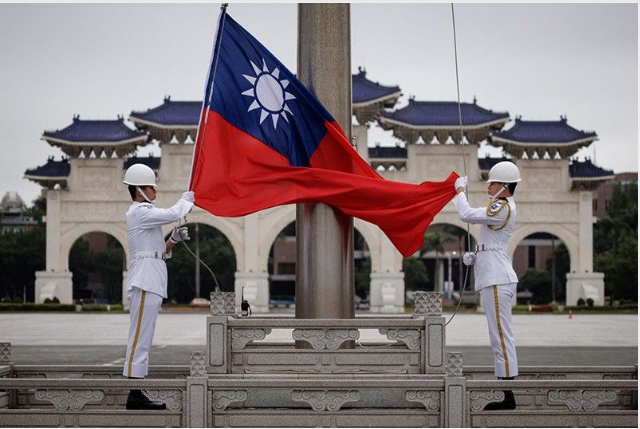 for more information click on this link
Taiwan, a self-governing democracy, remains a core issue for China. Beijing views the island as a breakaway province and has repeatedly stated its intention to reunify it with the mainland, De Facto U.S. Envoy Warns by force if necessary. However, the de facto U.S. envoy’s warning suggests that China’s ambitions are not confined to Taiwan. Instead, the country’s actions are part of a broader plan to reshape the regional order, De Facto U.S. Envoy Warns with implications for neighboring nations like Japan, South Korea, the Philippines, and even India.
This view is consistent with China’s Belt and Road Initiative (BRI), a multi-trillion-dollar infrastructure project designed to extend Beijing’s influence across Asia, Africa, and Europe. Through the BRI, China has established economic footholds in several countries, De Facto U.S. Envoy Warns including ports and strategic infrastructure. Critics argue that this project not only aims to boost China’s economic power but also serves as a means of exerting political influence and building military partnerships across the globe.
The Taiwan Issue: A Critical Flashpoint
Taiwan has long been a point of contention between the U.S. and China. While the U.S. does not formally recognize Taiwan as a sovereign state due to its “One China” policy, De Facto U.S. Envoy Warns it maintains unofficial relations with the island and is committed to providing it with the means to defend itself under the Taiwan Relations Act of 1979. This act does not guarantee U.S. military intervention in the event of a Chinese attack but commits to supporting Taiwan’s self-defense capabilities.
In recent years, China has ramped up its military activity near Taiwan, conducting air and naval exercises designed to intimidate the island. These actions have raised fears that Beijing may be preparing for a military invasion to forcibly reunite Taiwan with the mainland. The situation has led to increased cooperation between Taiwan and the U.S., De Facto U.S. Envoy Warns with Washington approving several arms deals to bolster Taiwan’s defense systems.
The de facto U.S. envoy’s recent statement, however, suggests that Taiwan may not be the only target of Chinese aggression. While Taiwan is seen as the most immediate flashpoint, China’s strategic ambitions likely involve exerting control over key maritime routes, expanding its influence in Southeast Asia, De Facto U.S. Envoy Warns and challenging the existing U.S.-led security architecture in the region. If Taiwan were to fall, De Facto U.S. Envoy Warns it could pave the way for China to exert greater influence over the entire Indo-Pacific region.
China’s Regional Goals Beyond Taiwan
China’s ambitions beyond Taiwan are clear when viewed in the context of its broader regional strategy. The South China Sea, one of the world’s most important shipping lanes, is a critical area where Beijing has sought to assert control. China claims nearly the entire South China Sea through its so-called “Nine-Dash Line,” De Facto U.S. Envoy Warns a demarcation that conflicts with the territorial claims of several other countries, De Facto U.S. Envoy Warns including the Philippines, Vietnam, Malaysia, and Brunei.
Over the past decade, China has constructed military installations on artificial islands in the South China Sea, allowing it to project power far from its shores. Despite international legal rulings that dismiss China’s claims as unfounded, De Facto U.S. Envoy Warns Beijing has continued its militarization of the area, placing airstrips, De Facto U.S. Envoy Warns missile systems, and military personnel on these islands. The result is a de facto Chinese control over one of the most strategic maritime regions in the world, through which nearly a third of global trade passes. 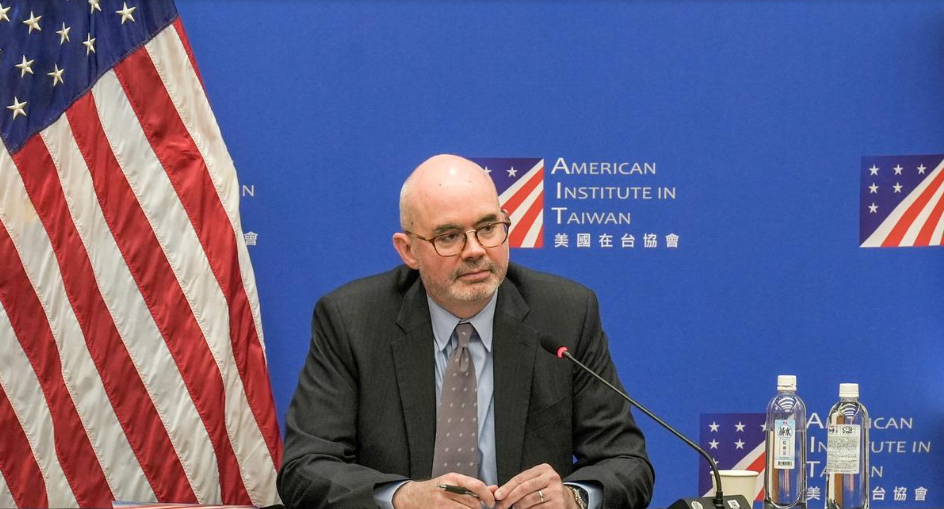 for more information click on this link
Beyond the South China Sea, China has also increased its assertiveness in the East China Sea, where it disputes territory with Japan. The Senkaku/Diaoyu Islands, claimed by both China and Japan, have been a particular source of tension. In recent years, China has increased its naval and air patrols in the area, De Facto U.S. Envoy Warns leading to confrontations with Japanese forces. The ongoing tensions between these two major economies are part of a broader contest for regional dominance, with Taiwan’s fate potentially influencing the outcome of these disputes.
India and China’s Border Tensions
China’s ambitions are not limited to its maritime borders. Along its western frontier, China has been engaged in a long-standing border dispute with India, which escalated in 2020 with a deadly clash in the Galwan Valley, resulting in the deaths of soldiers on both sides. This incident was one of the most violent confrontations between the two nuclear-armed neighbors in decades and highlighted the potential for conflict along their disputed border in the Himalayan region.
China has since increased its military presence along the Line of Actual Control (LAC), the de facto border between the two countries, De Facto U.S. Envoy Warns while simultaneously pushing for infrastructure development in the region. India, De Facto U.S. Envoy Warns recognizing the threat posed by China’s growing influence, has responded by enhancing its own military capabilities and forging stronger defense partnerships with countries like the U.S., Japan, and Australia through initiatives like the Quad (Quadrilateral Security Dialogue).
The border dispute with India is yet another example of China’s expansive territorial ambitions and willingness to use force to achieve its goals. If China’s actions in Taiwan were to succeed, it could embolden Beijing to adopt more aggressive postures in its other territorial disputes, including those with India.
The U.S. Response: Strengthening Alliances
The U.S. has been increasingly vocal in its opposition to China’s aggressive moves in the Indo-Pacific region, with the Biden administration placing a strong emphasis on rebuilding alliances and partnerships to counterbalance Beijing’s influence. The AUKUS pact between the U.S., the U.K., and Australia is one such example, De Facto U.S. Envoy Warns aimed at enhancing security cooperation in the region, particularly through the provision of nuclear-powered submarines to Australia.
Additionally, the Quad alliance, comprising the U.S., India, Japan, and Australia, has gained momentum as a strategic counterweight to China’s growing influence. The Quad has focused on a range of issues, De Facto U.S. Envoy Warns including military cooperation, infrastructure development, and supply chain security, with an eye on containing China’s regional ambitions.
The de facto U.S. envoy’s warning about China’s broader goals is likely to strengthen U.S. efforts to rally its allies in the region. Washington has consistently stressed that any attempt by China to forcibly change the status quo, whether in Taiwan or elsewhere, would have serious consequences for regional stability and global security. As China’s ambitions continue to grow, the U.S. is likely to deepen its engagement with regional powers, De Facto U.S. Envoy Warns providing military aid, conducting joint exercises, and increasing its naval presence in contested waters. 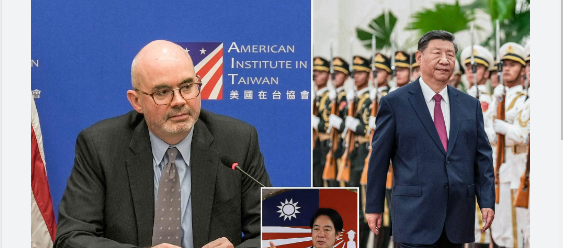 for more information click on this link
International Reactions to China’s Ambitions
Countries across the Indo-Pacific have been watching China’s actions with growing concern. Nations like Japan, South Korea, and the Philippines have all expressed alarm over China’s militarization of disputed territories and its increasingly assertive foreign policy. These countries, many of which rely on the U.S. for security guarantees, are bolstering their defense capabilities in response to the growing threat from Beijing.
Japan, in particular, has taken significant steps to enhance its military posture, breaking away from its post-World War II pacifist stance. The country has increased its defense budget, modernized its military forces, and sought closer security ties with the U.S. and other regional allies. Similarly, the Philippines, De Facto U.S. Envoy Warns which has been at the center of the South China Sea disputes, has strengthened its defense ties with the U.S., with Manila recently allowing American forces greater access to its military bases.
Southeast Asian nations, many of which have territorial disputes with China in the South China Sea, are also caught in a delicate balancing act. While these countries seek to maintain economic ties with China, they are increasingly wary of Beijing’s growing influence and its willingness to use force to achieve its goals. This has led to calls for greater U.S. engagement in the region and a push for multilateral approaches to address the challenges posed by China.
Conclusion: A Broader Challenge
The warning from the de facto U.S. envoy in Taiwan serves as a stark reminder that China’s ambitions extend well beyond the island. While Taiwan remains a critical flashpoint in the U.S.-China rivalry, Beijing’s broader goals involve reshaping the Indo-Pacific region and challenging the existing order. Whether it is through territorial disputes in the South and East China Seas, border tensions with India, De Facto U.S. Envoy Warns or its growing influence through the Belt and Road Initiative, China’s actions pose a significant challenge to regional stability.
As the U.S. and its allies respond to these challenges, the coming years will likely see an intensification of the geopolitical contest in the Indo-Pacific. ALSO READ:- Gaza Conflict: U.S. Pushes for Truce Deal as Netanyahu Rejects Concessions in Indirect Negotiations with Hamas