




Anti-Women the ever-dynamic landscape of Indian politics, where public perception and political narratives often collide, senior Congress leader Shashi Tharoor recently found himself at the center of a debate surrounding his stance on women’s issues. Responding firmly to allegations and criticism, Tharoor asserted, “No one could ever call me anti-women,” while also sharing details of a conversation he had with Union Minister Kiren Rijiju.
The exchange between the two leaders has sparked significant political and public interest, shedding light on the broader discourse around gender sensitivity, political accountability, and the role of leaders in shaping narratives around women’s rights in India.
This article delves into the background of the controversy, Tharoor’s clarification, his conversation with Rijiju, reactions from political circles, and the larger implications for Indian politics.
The Context: How the Controversy Began
The issue reportedly began when comments attributed to Shashi Tharoor were interpreted by some sections as being dismissive or insensitive toward women. In today’s politically charged environment, even nuanced statements can quickly become flashpoints, especially when they relate to gender.
Social media played a key role in amplifying the controversy, with critics accusing Tharoor of lacking sensitivity, while supporters argued that his remarks were taken out of context.
As the debate intensified, political opponents seized the opportunity to question his commitment to women’s empowerment, a sensitive and critical issue in Indian public discourse.
Tharoor’s Response: A Strong Rebuttal
Addressing the controversy, Shashi Tharoor issued a strong and unequivocal rebuttal. He stated:
“No one who knows my record, my writings, or my public life could ever call me anti-women.”
Tharoor emphasized that throughout his career, he has consistently supported gender equality, women’s rights, and empowerment initiatives. He pointed to his work as a parliamentarian, author, and public intellectual as evidence of his commitment.
His response was not just defensive but also reflective, aiming to reposition the narrative around his long-standing advocacy for gender justice.
The Conversation with Kiren Rijiju
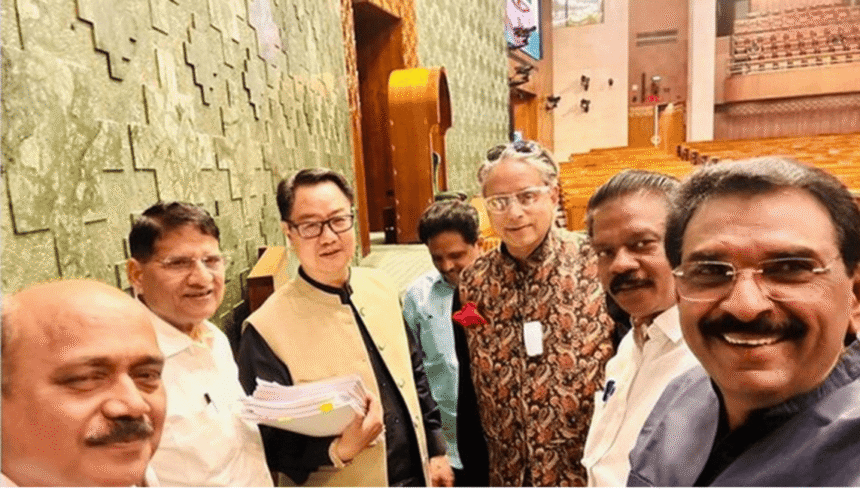
One of the most notable aspects of this episode was Tharoor’s disclosure of a conversation with Kiren Rijiju, a senior leader from the ruling party.
According to Tharoor, Rijiju reached out to him in a constructive and respectful manner. The discussion reportedly focused on clarifying the intent behind Tharoor’s remarks and addressing the concerns that had been raised. 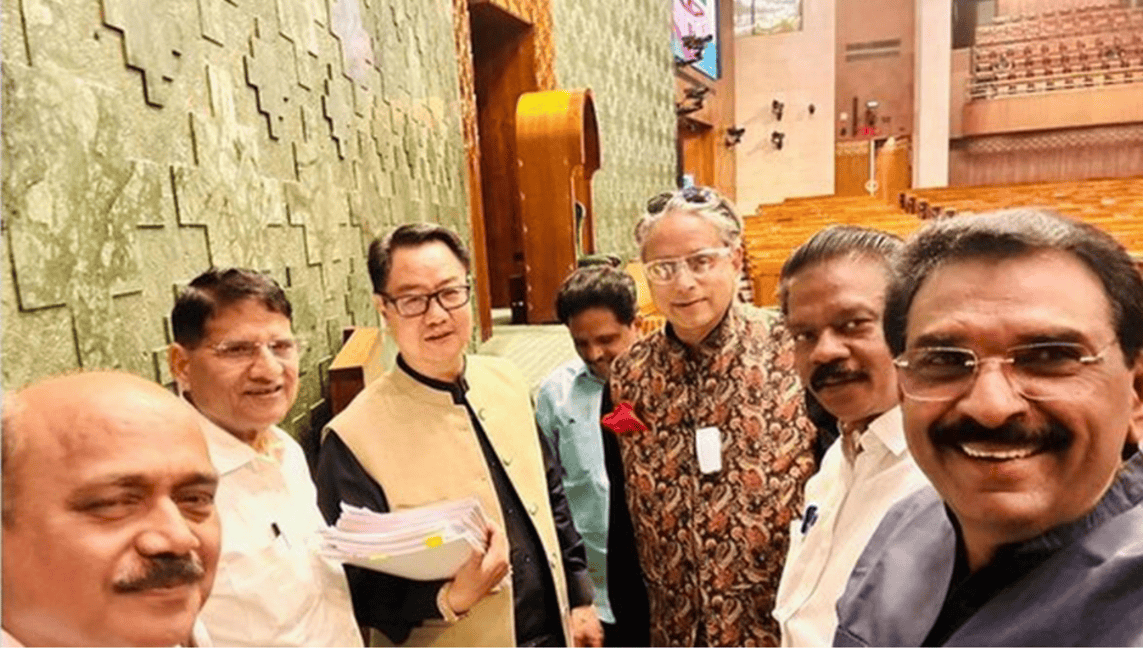 FORE MORE INFORMATION
Tharoor described the conversation as “cordial” and “productive,” highlighting that despite political differences, leaders can engage in meaningful dialogue.
This interaction stands out in an era often characterized by sharp political polarization, offering a glimpse of bipartisan communication and mutual respect.
Political Reactions: Divided Opinions
The controversy has elicited mixed reactions from across the political spectrum.
Support from Congress and Allies
Leaders from the Congress party rallied behind Shashi Tharoor, defending his record and criticizing what they described as a “manufactured controversy.” They argued that Tharoor’s contributions to discussions on gender equality are well-documented.
Criticism from Opposition Parties
On the other hand, some leaders from rival parties maintained that public figures must be extremely cautious in their language, especially on sensitive issues like gender. They suggested that even unintended remarks can have far-reaching consequences.
Neutral Voices Call for Balance
Several commentators and analysts adopted a more balanced view, acknowledging both the importance of accountability and the risk of overreaction in the age of social media.
Tharoor’s Track Record on Women’s Issues
To understand the credibility of Tharoor’s claim, it is essential to examine his track record.
Over the years, Shashi Tharoor has:
- Spoken extensively on gender equality in Parliament
- Advocated for stronger laws against violence against women
- Supported initiatives aimed at increasing women’s participation in politics and the workforce
- Written articles and books emphasizing social justice and inclusivity
His supporters argue that this body of work contradicts any suggestion that he holds anti-women views.
The Role of Social Media in Shaping Narratives
This episode also highlights the powerful role of social media in shaping political narratives.
In today’s digital age:
- Statements can be clipped and shared out of context
- Public opinion can form rapidly, often without full information
- Political controversies can escalate within hours
While social media has democratized communication, it has also made it easier for misinformation and misinterpretation to spread.
Tharoor himself has been an active user of social media, often engaging directly with critics and supporters alike. In this case, he used the platform to clarify his position and counter allegations.
Gender Sensitivity in Politics: A Broader Issue
The controversy underscores the importance of gender sensitivity in political discourse.
Public leaders are expected to:
- Use language that respects all sections of society
- Be mindful of how their words may be perceived
- Promote inclusive and progressive values
At the same time, there is also a need for fair interpretation and constructive dialogue, rather than immediate condemnation.
The Significance of Dialogue: Lessons from Tharoor–Rijiju Exchange
The interaction between Shashi Tharoor and Kiren Rijiju offers an important lesson.
In a political environment often marked by confrontation, their conversation demonstrates that:
- Dialogue can help clarify misunderstandings
- Respectful communication can bridge ideological divides
- Constructive engagement is possible even among rivals
Such interactions are crucial for maintaining the health of a लोकतांत्रिक system.
Public Perception and Political Image
For politicians, public perception is as important as policy positions.
Incidents like this can: 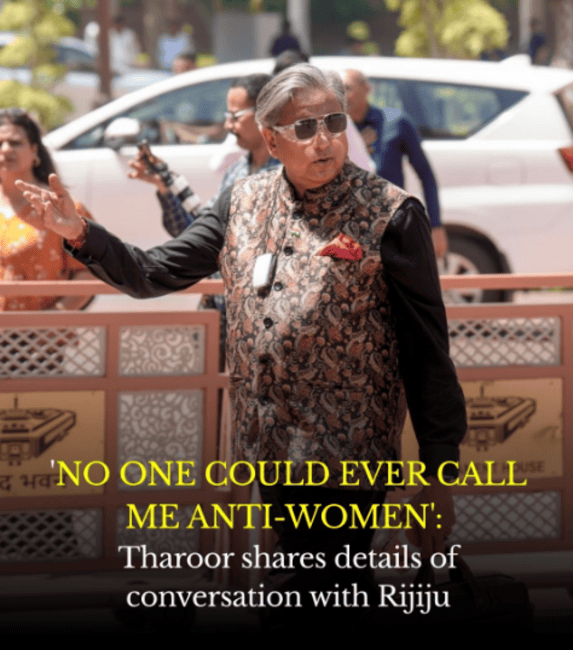 FORE MORE INFORMATION
- Impact a leader’s image
- Influence voter sentiment
- Shape media narratives
Tharoor’s prompt response and willingness to engage in dialogue may help mitigate any potential damage to his reputation.
Implications for Future Political Discourse
The episode is likely to have broader implications for how political leaders communicate in the future.
It may lead to:
- Greater caution in public statements
- Increased emphasis on context and clarity
- More proactive engagement with critics
At the same time, it also raises questions about the need for more nuanced and balanced public discourse.
Conclusion: Beyond Controversy to Constructive Conversation
The controversy surrounding Shashi Tharoor and his remarks serves as a reminder of the complexities of modern political communication.
While his statement—“No one could ever call me anti-women”—is a strong assertion of his beliefs and record, the episode also highlights the challenges of navigating public perception in a fast-paced digital world.
His conversation with Kiren Rijiju adds a positive dimension to the story, ցույցing that dialogue and mutual respect can still play a role in resolving controversies.
Ultimately, the incident goes beyond individual reputations. It reflects the evolving nature of political discourse in India—where accountability, communication, and perception intersect in increasingly complex ways. ALSO READ:-Trump Claims Iran–Israel War LIVE: Trump Claims Iran Will ‘Never’ Close Hormuz Again as Strait Reopens Amid Fragile Truce