



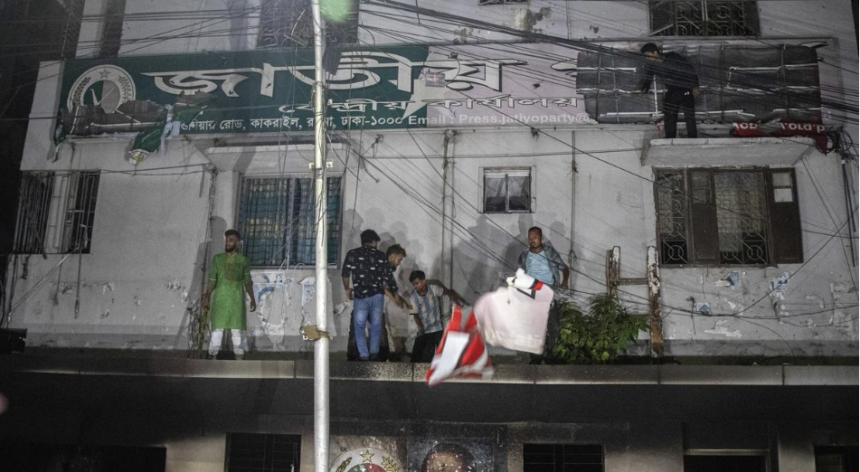
Tensions recent arson attack on the Jatiya Party headquarters in Dhaka highlights an ongoing wave of political unrest in Bangladesh. As the party that had shown support for ousted leader Sheikh Hasina, the Jatiya Party has come under heightened scrutiny, facing violent consequences amidst growing political instability. This attack, Tensions in which unidentified individuals set fire to the party offices, has sent shockwaves through the political community. So far, no group has claimed responsibility, leaving citizens and officials on edge as investigations unfold.
Background: Political Landscape and Jatiya Party’s Role
Since its inception, the Jatiya Party has played a key role in Bangladesh’s political framework. It has seen both successes and significant challenges, especially given its alliance with former Prime Minister Sheikh Hasina. This section would explore the Jatiya Party’s historical ties to various Bangladeshi administrations and its stance during times of political turmoil, highlighting how these ties have influenced its role in recent events. 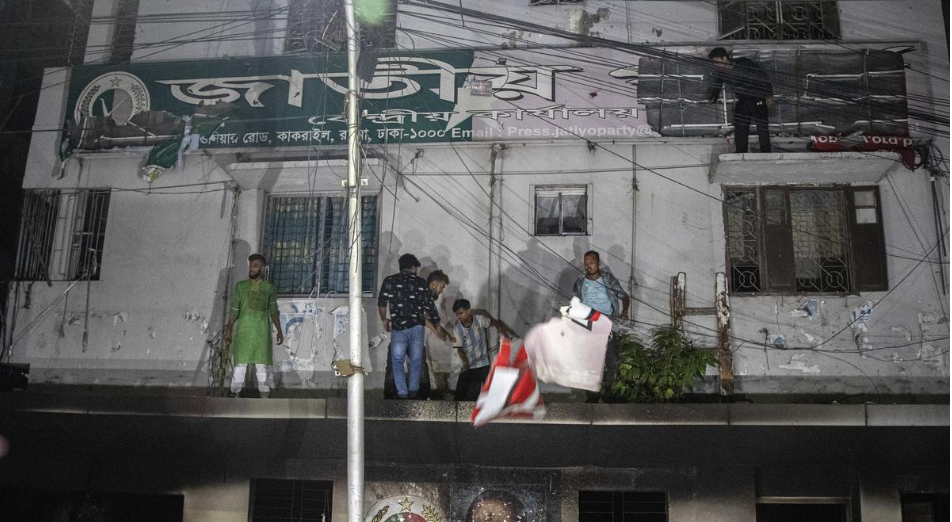 For the more information click on this link
Sheikh Hasina’s Leadership and Her Ouster
Sheikh Hasina, one of the most influential leaders in Bangladesh, has held office multiple times, gaining significant popularity but also facing opposition. This section would outline the circumstances leading to her ouster, the criticisms her administration faced, Tensions and how her supporters—including the Jatiya Party—have responded to these changes.
The Attack on Jatiya Party Headquarters
A detailed account of the attack, the extent of damage to the Jatiya Party offices, and initial reactions from party members and local authorities. This section would focus on the severity of the attack, Tensions the absence of claims of responsibility, and any information from the police or investigative bodies on suspects or motives.
Public Reaction and Political Implications
In the wake of the attack, citizens and political parties have voiced their concerns about rising violence and its impact on Bangladesh’s political stability. This part would discuss the public’s perception of the attack and examine how other political parties, activists, Tensions and international observers are responding to these escalating tensions.
Government Response and Investigations
The government has launched an investigation to uncover the motives and potential perpetrators behind this arson. This section would cover government statements, actions taken by law enforcement, Tensions and any new policies or measures being considered to prevent similar incidents.
The Role of Media and Social Media
Media outlets in Bangladesh are extensively covering this attack, with discussions on social media platforms escalating. This part would delve into how traditional media and social networks are influencing public opinion and the spread of information, Tensions as well as any concerns about misinformation or inflammatory posts.  For the more information click on this link
Historical Context of Political Violence in Bangladesh
Political violence has periodically erupted in Bangladesh, often during transitions of power or heightened tensions. This section would provide a brief history of similar incidents in Bangladesh to illustrate patterns and help readers understand the current events within a broader historical context.
The International Perspective
Many countries keep a close watch on Bangladesh’s political climate due to its strategic location in South Asia. This part would analyze international reactions, i Tensions including statements from neighboring countries or global organizations, as they observe the developing situation.
Conclusion: The Path Forward for Bangladesh
Finally, this section would summarize the key points and reflect on the potential outcomes of this attack on the Jatiya Party headquarters. It would emphasize the need for peaceful dialogue, Tensions addressing underlying political grievances, and fostering unity to ensure Bangladesh’s future stability. ALSO READ:-Chinese Researchers Develop Military AI Model Based on Meta’s LLaMA: ChatBIT for Strategic Dialogue and Q&A in Defense