





A High-Stakes Legal Battle Amid West Bengal’s Crucial Electoral Phase Supreme Court to Hear Trinamool’s Plea
Introduction
Supreme Court to Hear Trinamool’s Plea the 2026 Assembly elections in West Bengal have taken a dramatic legal turn as the Trinamool Congress (TMC) approached the Supreme Court of India challenging the deployment of Central government staff to supervise the counting of votes. The apex court is scheduled to hear the plea on May 2, a development that has added a new dimension to an already fiercely contested political battle in the State.
At the heart of the controversy lies the question of electoral neutrality, federal principles, and the extent of the Election Commission of India (ECI)’s powers. With political temperatures rising and allegations flying thick and fast, the court’s decision could have far-reaching consequences for the conduct of elections not only in West Bengal but across India.
Background: A Politically Charged Election Supreme Court to Hear Trinamool’s Plea
West Bengal has long been a politically vibrant and often volatile State. The 2026 Assembly elections are particularly significant as they are seen as a referendum on the governance of Chief Minister Mamata Banerjee and her party, the Trinamool Congress.
The principal challenger remains the Bharatiya Janata Party (BJP), which has been aggressively expanding its footprint in the State over the past decade. The elections have witnessed high voter turnout, intense campaigning, and sporadic incidents of violence, reflecting the high stakes involved.
The Core Issue: Central Staff in Vote Counting Supreme Court to Hear Trinamool’s Plea
What Has Been Challenged?
The TMC’s petition challenges the decision to deploy Central government officials to oversee the counting process in select constituencies. Traditionally, vote counting is conducted under the supervision of State-appointed officials and the Election Commission’s machinery.
The introduction of Central personnel, according to the TMC, Supreme Court to Hear Trinamool’s Plea represents an “unprecedented intrusion” into the State’s electoral process.
TMC’s Arguments
The party has raised several key concerns:
- Violation of Federal Structure: The move is seen as undermining the autonomy of State institutions.
- Bias Concerns: Allegations that Central staff may not remain neutral.
- Procedural Irregularities: Claims that the decision lacks transparency and proper consultation.
TMC leaders argue that such measures create an uneven playing field and could influence the outcome of the elections.  FORE MORE INFORMATION
Election Commission’s Stand
The Election Commission of India has defended its decision, Supreme Court to Hear Trinamool’s Plea stating that the deployment of Central staff is aimed at ensuring free, fair, and transparent elections.
Key Justifications
- Maintaining Neutrality: Central officials are perceived as less susceptible to local political pressures.
- Addressing Violence Concerns: Given the history of electoral violence in West Bengal, Supreme Court to Hear Trinamool’s Plea additional oversight is deemed necessary.
- Strengthening Credibility: Ensuring public confidence in the electoral process.
The Commission has reiterated that it operates within its constitutional mandate and that its decisions are guided solely by the objective of conducting impartial elections.
Legal Dimensions of the Case
Role of the Supreme Court
The Supreme Court of India will examine whether the Election Commission’s decision aligns with constitutional principles and established legal precedents.
Key Questions Before the Court
- Does the ECI have the authority to deploy Central staff for vote counting?
- Does this move violate the federal structure of the Constitution?
- Are there sufficient safeguards to ensure neutrality and transparency?
Legal experts suggest that the case could set an important precedent regarding the balance of power between the Centre and the States in electoral matters.
Political Reactions
Trinamool Congress
The Trinamool Congress has termed the move a “direct attack on democracy.” Party leaders have accused the Centre of attempting to influence the election outcome through administrative means.
Bharatiya Janata Party
The Bharatiya Janata Party has dismissed the allegations, Supreme Court to Hear Trinamool’s Plea asserting that the demand for neutral oversight is justified given the State’s track record.
BJP leaders argue that the presence of Central staff will ensure that counting is conducted without interference or manipulation.
Ground Situation in West Bengal
Security Arrangements
Extensive security measures have been put in place across the State:
- Deployment of Central Armed Police Forces
- Multi-layered security at counting centres
- Surveillance through CCTV and webcasting
Voter Sentiment
Voters in West Bengal have shown strong participation, Supreme Court to Hear Trinamool’s Plea reflecting the importance of the election. However, concerns about fairness and transparency remain a recurring theme in public discourse. 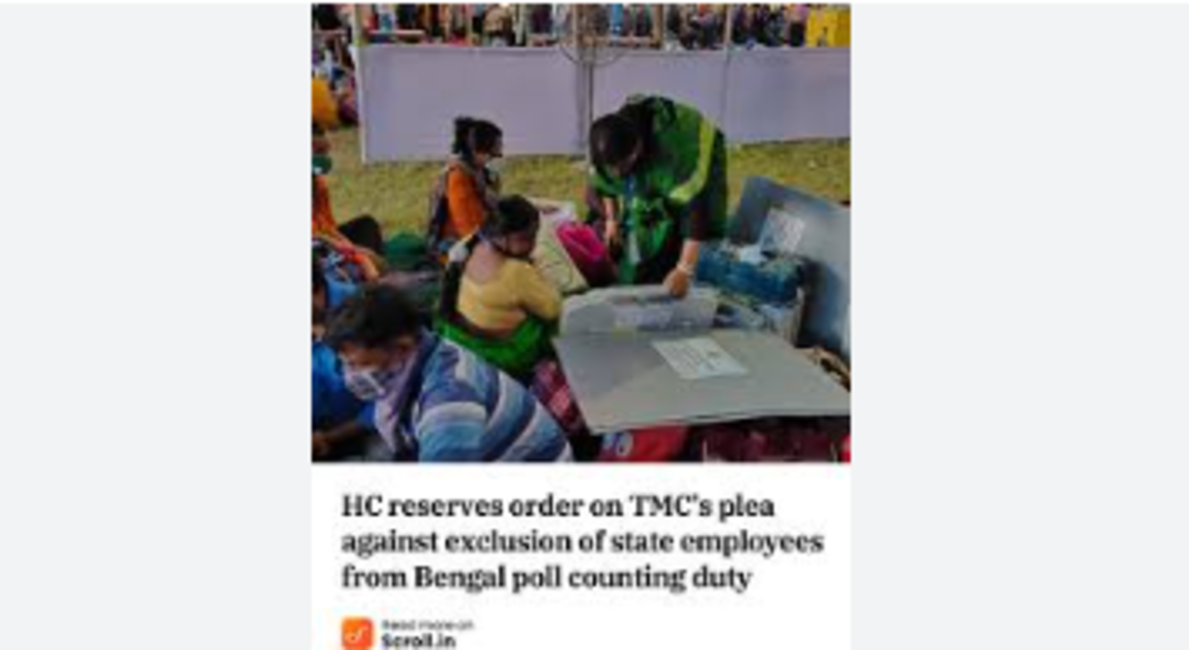 FORE MORE INFORMATION
Federalism vs Electoral Integrity
A Delicate Balance
The controversy highlights the ongoing tension between:
- Federal Autonomy: States’ rights to manage their internal affairs
- Central Oversight: Ensuring uniform standards of electoral integrity
While the Constitution grants significant powers to the Election Commission, Supreme Court to Hear Trinamool’s Plea it also emphasizes the importance of federal principles.
Historical Context
India’s electoral system has evolved over decades, with the Election Commission playing a pivotal role in maintaining credibility. However, disputes over its decisions are not new, Supreme Court to Hear Trinamool’s Plea particularly in politically sensitive States.
Potential Outcomes of the Hearing
If the Court Upholds ECI’s Decision
- Central staff will continue to supervise counting
- ECI’s authority will be reinforced
- Opposition concerns may persist
If the Court Rules in Favor of TMC
- Central staff deployment could be withdrawn
- Greater emphasis on State autonomy
- Possible changes in future electoral procedures
Implications Beyond West Bengal
The case has national significance as it could influence:
- Future election management practices
- Centre-State relations
- Legal interpretation of the Election Commission’s powers
Other States may closely watch the outcome, Supreme Court to Hear Trinamool’s Plea especially those with politically competitive environments. 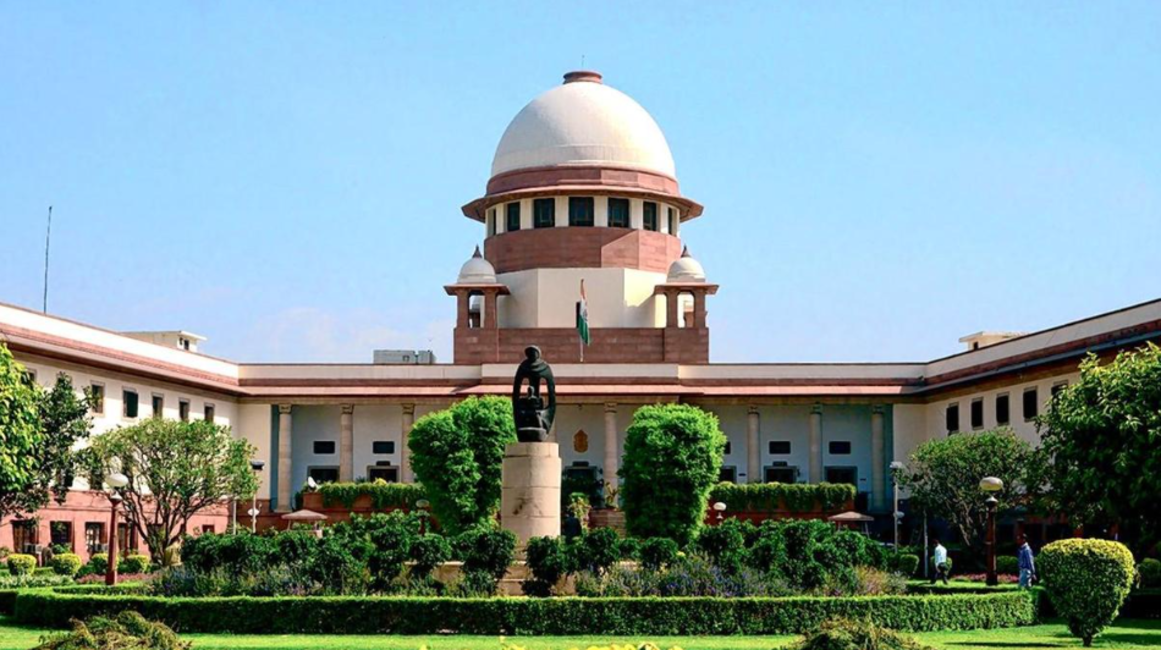 FORE MORE INFORMATION
Expert Opinions
Legal Experts
Many constitutional experts believe the case will hinge on the interpretation of Article 324, which grants the Election Commission broad powers.
Political Analysts
Analysts suggest that the controversy reflects deeper political polarization and mistrust between parties, Supreme Court to Hear Trinamool’s Plea rather than purely procedural concerns.
The Road Ahead
As the Supreme Court of India prepares to hear the case on May 2, all eyes are on how it will navigate the complex interplay of law, politics, and constitutional principles.
The decision will come at a critical juncture, Supreme Court to Hear Trinamool’s Plea with counting day approaching and political stakes at their peak.
Conclusion
The Trinamool Congress’s plea against Central supervision in vote counting has brought to the forefront fundamental questions about democracy, federalism, and electoral integrity. As West Bengal awaits the Supreme Court’s verdict, the broader implications of this case extend far beyond a single State election.
In a democracy as vast and diverse as India, Supreme Court to Hear Trinamool’s Plea maintaining trust in the electoral process is paramount. Whether through Central oversight or State autonomy, the ultimate goal must remain the same: ensuring that the will of the people is accurately and fairly reflected. ALSO READ:-Rajnath Singh Urges Italy to Refrain from Sharing Defence Technology with Pakistan: Strategic Concerns and Global Implications 2026