



1. Introduction: A New Era Begins in Dhaka
Tarique Rahman Sworn In as New Prime Minister of Bangladesh a dramatic political development that marks a decisive shift in Bangladesh’s governance, Tarique Rahman was sworn in as the new Prime Minister of Bangladesh, following a sweeping electoral victory by the Bangladesh Nationalist Party (BNP).
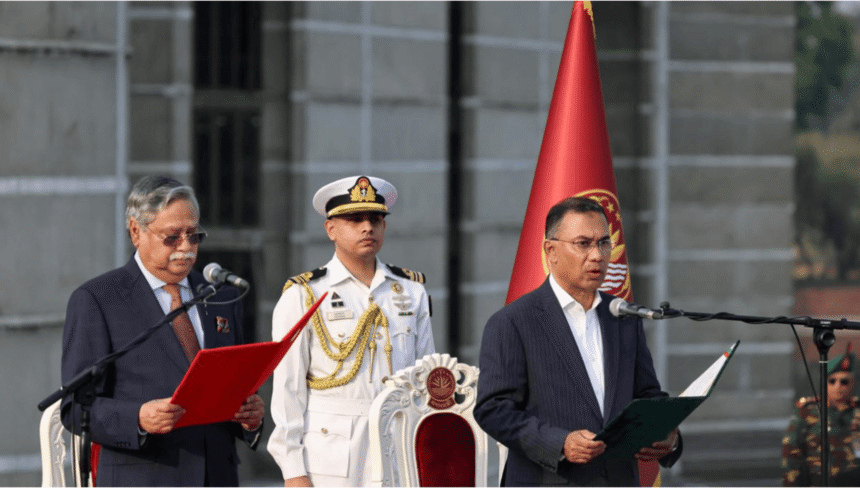
The swearing-in ceremony, held in the capital city of Dhaka, was attended by senior political leaders, Tarique Rahman Sworn In as New Prime Minister diplomats, military officials, and international observers. The moment symbolized not just a transfer of power but the beginning of what many are calling a transformative chapter in the country’s political history.
Rahman’s ascent to the top office comes after years of political turbulence, opposition struggles, and intense electoral competition. His leadership now carries the weight of public expectations for economic revival, institutional reforms, and diplomatic recalibration.
2. The Swearing-In Ceremony: Symbolism and Significance
The oath-taking ceremony was marked by formal protocol and high political symbolism. Taking the oath under the constitutional framework of Bangladesh, Rahman pledged to uphold the Constitution, safeguard democracy, and work toward national unity.
The ceremony drew attention both domestically and internationally, Tarique Rahman Sworn In as New Prime Minister reflecting the geopolitical significance of Bangladesh in South Asia. Representatives from neighboring countries and key global partners attended the event, signaling recognition of the new administration.
Political analysts noted that the atmosphere was both celebratory and cautious. While supporters hailed the occasion as a democratic milestone, observers emphasized the challenges that lie ahead.
3. The Road to Power: From Opposition to Office
Tarique Rahman’s journey to the prime ministership has been anything but conventional. As a senior leader of the BNP, Tarique Rahman Sworn In as New Prime Minister he played a central role in mobilizing party cadres and shaping campaign strategy during the recent elections.
The BNP secured a commanding majority in Parliament, capitalizing on voter concerns over inflation, employment, governance transparency, and economic inequality. The scale of victory reflected public appetite for change.
Rahman’s leadership campaign focused on economic reforms, institutional strengthening, and restoring democratic norms. His message resonated strongly with younger voters and urban constituencies, where economic opportunities and governance reforms were dominant issues.
4. Political Background and Legacy
Tarique Rahman is a prominent figure in Bangladesh’s political landscape. As the son of former Prime Minister Khaleda Zia, he inherited a deep-rooted political legacy within the BNP.
The Bangladesh Nationalist Party, Tarique Rahman Sworn In as New Prime Minister founded by former President Ziaur Rahman, has historically positioned itself as a nationalist and center-right political force. Its rivalry with the Awami League has defined much of Bangladesh’s political history.
Rahman’s elevation to the premiership signals a generational transition within the BNP, marking a shift toward younger leadership while retaining party continuity.
5. Electoral Mandate: What the Results Reveal
The BNP’s victory was comprehensive, cutting across rural and urban constituencies. High voter turnout, Tarique Rahman Sworn In as New Prime Minister particularly among youth and women, suggested a vibrant democratic process.
The electorate’s mandate reflects:
-
Demand for economic stability
-
Frustration over inflationary pressures
-
Desire for institutional reforms
-
Aspirations for stronger global engagement
Rahman’s government now faces the responsibility of translating this mandate into tangible policy outcomes.
6. Economic Priorities: Addressing Immediate Challenges
Bangladesh’s economy has experienced steady growth over the past decade, Tarique Rahman Sworn In as New Prime Minister driven largely by garment exports, remittances, and manufacturing. However, recent global economic headwinds have created challenges.
Key economic priorities for the new government include:
-
Controlling inflation
-
Stabilizing the currency
-
Boosting export competitiveness
-
Encouraging foreign direct investment
-
Generating employment opportunities
Rahman has emphasized structural reforms aimed at enhancing investor confidence and diversifying the economy beyond traditional sectors. 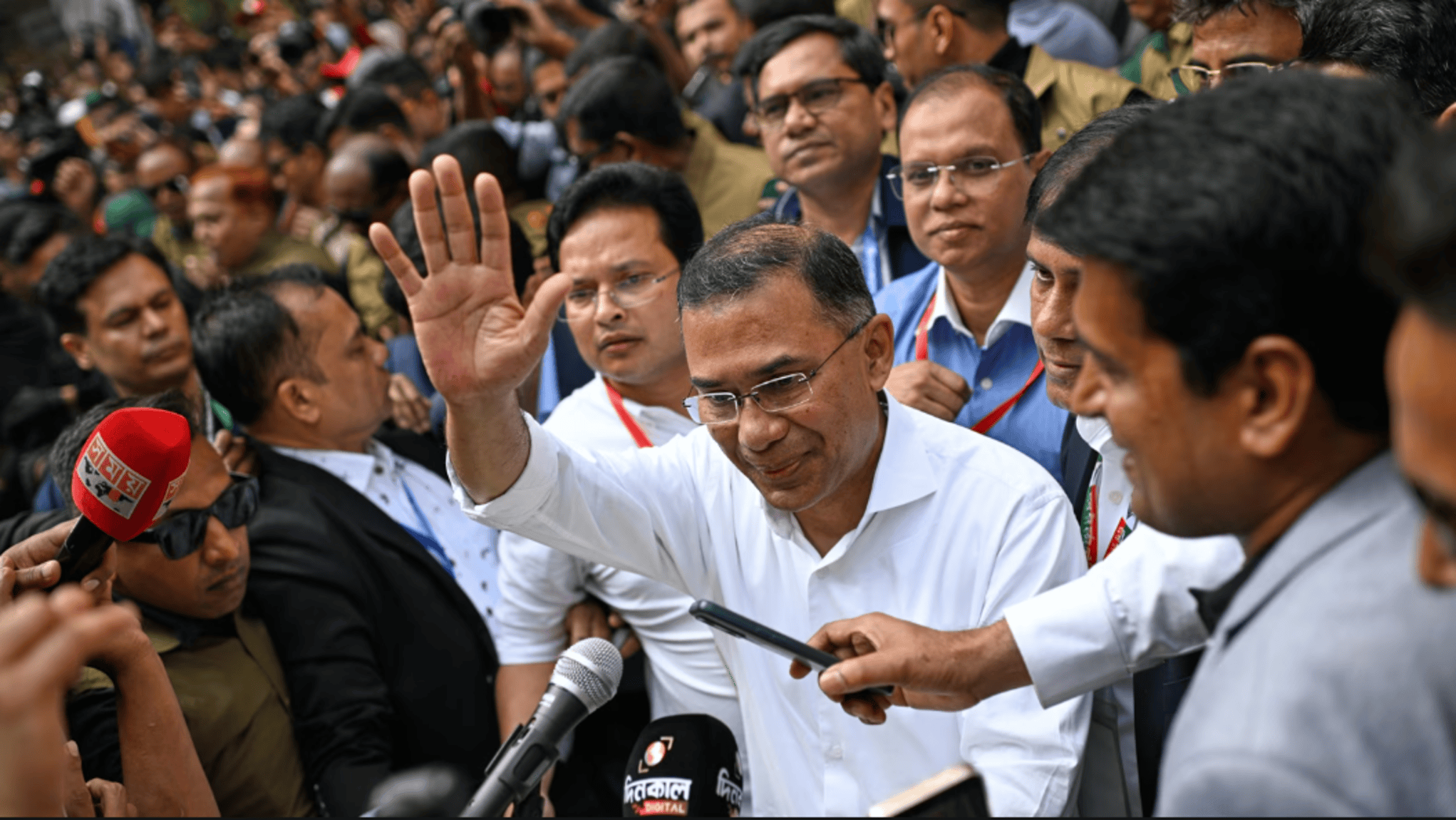 watch video for more info
7. Youth and Employment: A Defining Issue
Youth unemployment and underemployment were central themes during the campaign. With a large portion of Bangladesh’s population under 35, job creation remains critical.
The new Prime Minister has pledged to:
-
Promote entrepreneurship
-
Expand vocational training programs
-
Support technology startups
-
Strengthen digital infrastructure
Policies aimed at fostering innovation and technology adoption are expected to feature prominently in upcoming budget announcements.
8. Governance and Institutional Reform
Institutional transparency and governance reform were key pillars of BNP’s campaign platform.
Rahman’s administration is likely to prioritize:
-
Strengthening parliamentary oversight
-
Reforming anti-corruption frameworks
-
Enhancing judicial independence
-
Modernizing administrative systems
Political analysts note that effective implementation of reforms will determine the credibility of the new government.
9. Foreign Policy Outlook
Bangladesh’s strategic location in South Asia makes its foreign policy orientation highly significant. Rahman has signaled intent to pursue balanced diplomacy, Tarique Rahman Sworn In as New Prime Minister maintaining strong ties with regional neighbors and major global powers.
Key foreign policy priorities may include:
-
Strengthening trade ties with South Asian partners
-
Enhancing connectivity projects
-
Expanding export markets
-
Managing relations with global economic blocs
Observers anticipate continuity in regional cooperation while expecting recalibration in certain bilateral engagements.
10. Regional Reactions
Neighboring countries have welcomed Rahman’s swearing-in and expressed readiness to work with the new administration.
Diplomatic messages emphasized cooperation in trade, Tarique Rahman Sworn In as New Prime Minister connectivity, climate resilience, and security.
Bangladesh plays a crucial role in regional supply chains, migration flows, and maritime security in the Bay of Bengal. Stability in Dhaka has broader implications for South Asia.
11. Social Development and Welfare Policies
Bangladesh has made notable strides in poverty reduction, healthcare access, Tarique Rahman Sworn In as New Prime Minister and education over the past two decades.
Rahman’s government has pledged to:
-
Protect social safety nets
-
Improve healthcare delivery systems
-
Expand educational infrastructure
-
Promote gender equality initiatives
Balancing welfare commitments with fiscal sustainability will be a key policy challenge.
12. Economic Reforms and Global Integration
Rahman’s leadership signals potential economic liberalization measures designed to attract foreign capital and integrate Bangladesh further into global supply chains.
Policy areas under consideration may include:
-
Tax system modernization
-
Simplification of business regulations
-
Expansion of special economic zones
-
Support for small and medium enterprises
Global investors are closely watching the new government’s policy signals.
13. Security and Stability
Internal security and counterterrorism remain important priorities. Bangladesh has maintained relative stability in recent years, Tarique Rahman Sworn In as New Prime Minister and the new administration has pledged continuity in maintaining law and order.
Strengthening border management and regional security cooperation will likely remain key components of policy. 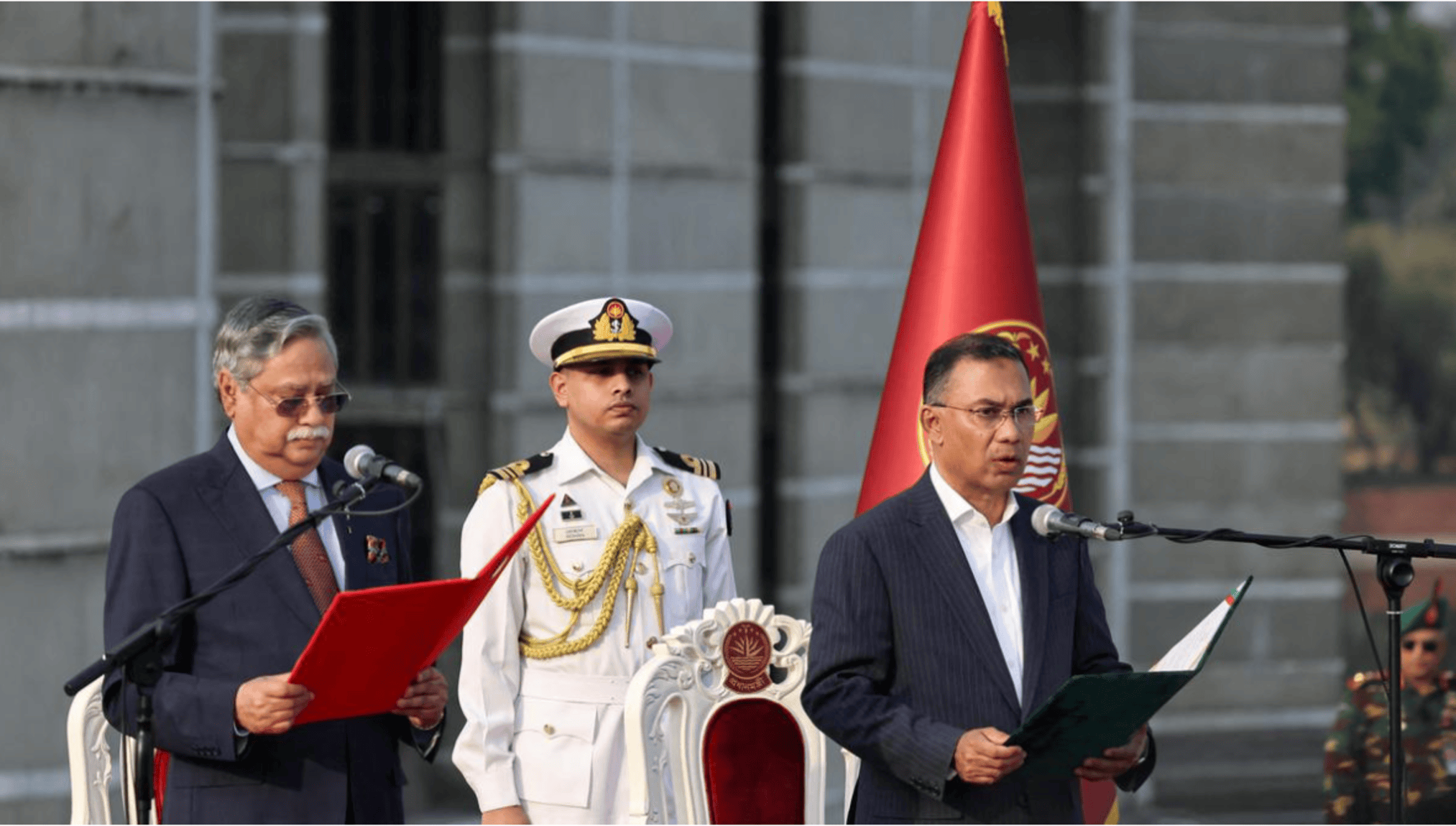 watch video for more info
14. Challenges Ahead
Despite the celebratory mood, significant challenges remain:
-
Managing high public expectations
-
Addressing economic pressures
-
Ensuring smooth transition of power
-
Maintaining political stability
Political polarization may also pose hurdles if opposition groups challenge policy directions.
15. Public Expectations and Political Accountability
The scale of the BNP’s victory creates strong expectations for rapid change. Citizens anticipate:
-
Lower inflation
-
Greater job opportunities
-
Improved public services
-
Transparent governance
Failure to deliver on promises could erode public trust. Rahman’s leadership style and ability to build consensus will be critical.
16. The Significance of Democratic Transition
The swearing-in represents a peaceful transfer of power — a hallmark of democratic resilience.
High voter turnout and orderly elections reinforce Bangladesh’s democratic credentials on the global stage.
International observers have emphasized the importance of continued institutional strengthening to preserve democratic norms.
17. Vision for the Future
In his inaugural remarks, Rahman outlined a vision centered on economic revival, unity, Tarique Rahman Sworn In as New Prime Minister and global engagement.
He emphasized:
-
Inclusive development
-
Digital transformation
-
Infrastructure modernization
-
Climate resilience
Bangladesh faces climate vulnerabilities, making environmental policy integration a necessary component of long-term planning.
18. Conclusion: A Defining Political Moment
The swearing-in of Tarique Rahman as Prime Minister marks a pivotal moment in Bangladesh’s political journey. Backed by a decisive electoral mandate, Tarique Rahman Sworn In as New Prime Minister his administration now shoulders the responsibility of steering the nation through economic challenges and governance reforms.
With public expectations running high and regional dynamics evolving, Rahman’s leadership will be tested in the coming months. Whether he succeeds in translating campaign promises into measurable outcomes will shape Bangladesh’s trajectory for years to come.
The ceremony in Dhaka symbolized hope, renewal, and the democratic will of the people. The real measure of success, however, will lie in policy execution, economic stability, and inclusive progress. ALSO READ:- Asian Shooting Championship Glory: Esha Singh’s Golden Double Powers India, Samrat Clinches Bronze 2026