


1. Introduction: A Defining Moment in Bilateral Ties
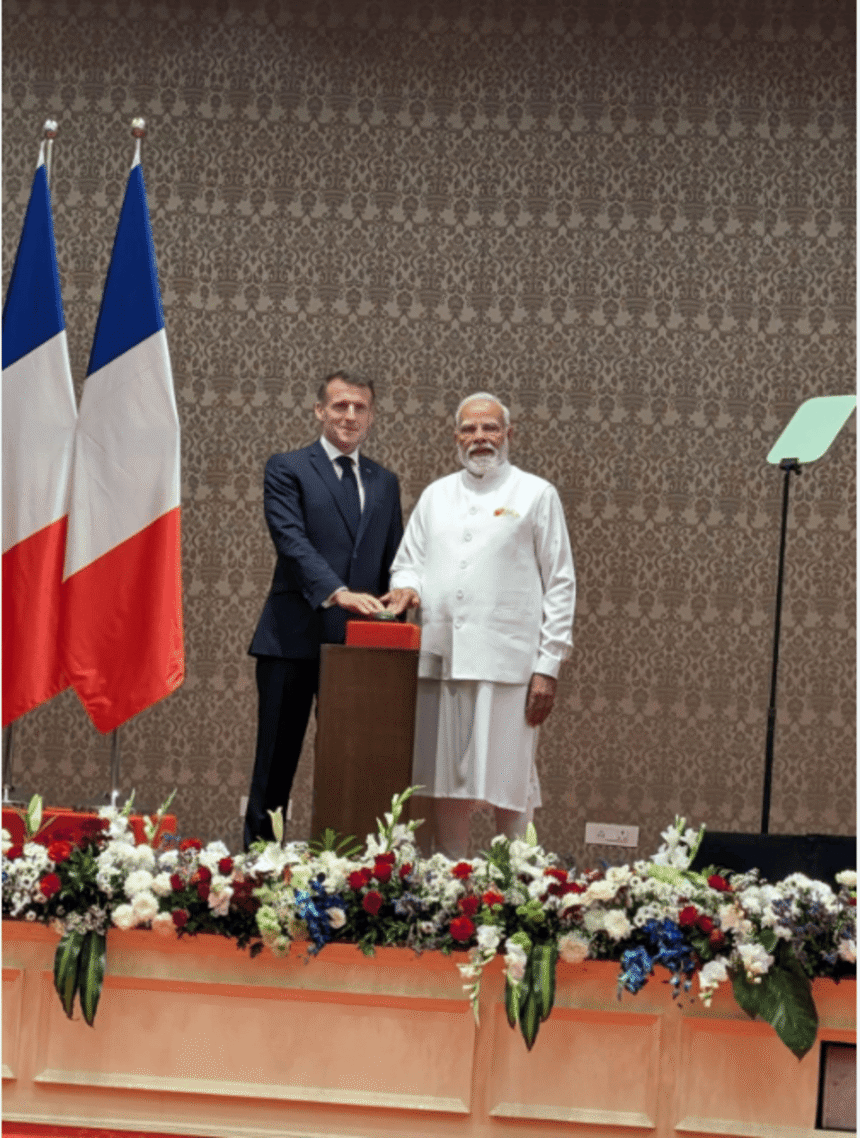
“Starting a New Chapter in India-France Relations,” declared French President Emmanuel Macron during high-level talks with Indian Prime Minister Narendra Modi, underlining the renewed momentum in the India–France strategic partnership. The statement was not merely ceremonial; it reflected a shared vision to deepen defence cooperation, enhance collaboration in critical technologies, and strengthen geopolitical alignment at a time of global uncertainty.
India and France have steadily expanded their ties over the past two decades. From defence acquisitions to climate change initiatives and Indo-Pacific cooperation, the two nations have built a trusted and resilient partnership. The latest talks, however, indicate a transition from traditional cooperation to a more comprehensive and future-oriented alliance.
This article examines the strategic significance of Macron’s remarks, Starting a New Chapter in India-France Relations the key areas of cooperation discussed during the talks, and the broader geopolitical context that makes this partnership more relevant than ever.
2. Historical Foundations of the India–France Partnership
India and France elevated their relationship to a Strategic Partnership in 1998. Unlike many bilateral relationships shaped by shifting alliances, India–France ties have remained consistent and stable. Paris was among the first global capitals to recognize India as a responsible nuclear power following the Pokhran tests.
Since then, defence has formed the backbone of cooperation. French military equipment — ranging from aircraft to submarines — has played a vital role in modernizing India’s armed forces. The acquisition of Rafale fighter jets marked a milestone in bilateral defence engagement.
Yet, the relationship extends beyond defence. France has consistently supported India’s bid for a permanent seat at the United Nations Security Council and has collaborated closely in multilateral forums, Starting a New Chapter in India-France Relations including climate negotiations.
Macron’s latest remarks build upon this strong historical base but signal a shift toward next-generation collaboration. 

3. Defence Cooperation: Strengthening Strategic Autonomy
One of the most significant outcomes of the Modi–Macron talks was the emphasis on shoring up defence cooperation. Both leaders acknowledged that evolving global security challenges demand deeper strategic coordination.
France has emerged as one of India’s most reliable defence partners. Joint military exercises between the Indian and French armed forces have become increasingly sophisticated. The Varuna naval exercise, Garuda air exercise, and Shakti army exercise demonstrate high levels of interoperability.
The defence dimension of the relationship now extends beyond buyer-seller dynamics. Increasingly, Starting a New Chapter in India-France Relations discussions focus on joint development, technology transfer, and co-production under India’s “Make in India” initiative. This aligns with India’s push for defence self-reliance while ensuring access to cutting-edge French technology.
For France, India represents not only a major defence market but also a strategic ally in the Indo-Pacific — a region of growing importance for Paris due to its overseas territories and maritime interests.
4. The Indo-Pacific Vision: A Shared Geopolitical Outlook
India and France share a common vision for the Indo-Pacific — one based on freedom of navigation, Starting a New Chapter in India-France Relations sovereignty, and rules-based order. France is the only European Union nation with a significant military presence in the region.
Through maritime cooperation and naval exercises, the two countries have strengthened surveillance and security mechanisms in the Indian Ocean. Their cooperation acts as a stabilizing factor in a region marked by rising tensions and strategic competition.
Macron’s call for a “new chapter” likely includes enhancing maritime security frameworks and expanding trilateral partnerships with like-minded countries. Both leaders recognize that strategic coordination in the Indo-Pacific is crucial to maintaining balance in global power dynamics.
5. Critical Technology: The Next Frontier
A major highlight of the discussions was the intention to enhance bilateral engagement in critical technologies. In the 21st century, technology defines power. Artificial intelligence, quantum computing, cybersecurity, Starting a New Chapter in India-France Relations space cooperation, and semiconductors are no longer just commercial areas; they are strategic domains.
India’s rapidly expanding digital economy makes it an attractive partner for France’s technological ecosystem. French companies have already invested heavily in India’s IT, renewable energy, Starting a New Chapter in India-France Relations and urban infrastructure sectors.
The two governments are expected to encourage joint research and development initiatives. Collaboration in space technology — an area where both countries possess strong capabilities — is also likely to deepen. Space agencies from both nations have previously worked together on satellite missions and climate observation projects.
Macron’s remarks suggest that technological collaboration will now be central rather than peripheral to the partnership.
6. Economic Engagement and Trade Expansion
Beyond defence and technology, the leaders discussed expanding trade and investment flows. Bilateral trade between India and France has grown steadily but remains below potential.
French multinational corporations have a significant presence in India across sectors such as aerospace, energy, luxury goods, infrastructure, and transport. Meanwhile, Indian companies have also invested in France, Starting a New Chapter in India-France Relations particularly in IT and pharmaceuticals.
The focus now is on diversifying supply chains and encouraging sustainable industrial cooperation. As global supply chains realign due to geopolitical disruptions, India and France see opportunities to enhance mutual resilience.
Macron emphasized that strengthening economic ties will be essential to sustaining the strategic partnership.
7. Climate Action and Renewable Energy Cooperation
Climate change continues to be a major area of collaboration. France has been a strong supporter of India’s renewable energy ambitions. Together, they launched the International Solar Alliance, Starting a New Chapter in India-France Relations headquartered in India, to promote solar energy adoption worldwide.
Both nations reaffirmed their commitment to clean energy transitions and green hydrogen projects. France’s expertise in nuclear energy also complements India’s growing energy needs.
Sustainable development, climate finance, and green technology transfer are expected to remain integral to the “new chapter” outlined by Macron.
8. Multilateral Cooperation and Global Governance Reform
India and France share common positions on many global governance issues. Paris supports India’s bid for permanent membership in the UN Security Council, recognizing its demographic and economic weight.
Both nations advocate for reform of international institutions to reflect contemporary realities. Their collaboration extends to forums such as the G20, where they coordinate positions on economic stability, Starting a New Chapter in India-France Relations climate action, and development finance.
Macron’s statement also signals stronger political alignment in addressing global crises — from conflicts in Europe to tensions in Asia. 
9. Cultural and People-to-People Exchanges
While strategic matters dominate headlines, cultural diplomacy remains an important pillar of the relationship. Educational exchanges, tourism, and artistic collaborations have strengthened mutual understanding.
France remains a popular destination for Indian students pursuing higher education. Similarly, Indian culture — from yoga to cinema — has found enthusiastic audiences in France.
The leaders underscored the need to facilitate mobility, enhance academic partnerships, Starting a New Chapter in India-France Relations and expand language programs to deepen societal links.
10. Challenges and Strategic Calculations
Despite strong alignment, challenges remain. Differences in trade regulations, bureaucratic hurdles, and geopolitical sensitivities occasionally create friction. However, Starting a New Chapter in India-France Relations the resilience of the partnership has ensured that such challenges are managed constructively.
India values strategic autonomy and maintains relations with multiple global powers. France, too, pursues an independent foreign policy within Europe. This shared commitment to autonomy often strengthens, rather than weakens, their partnership.
Macron’s phrasing — “starting a new chapter” — reflects awareness that the international environment is changing rapidly. Both leaders appear determined to future-proof their relationship.
11. Strategic Implications for Europe and Asia
For Europe, India is an essential partner in ensuring economic diversification and strategic balance. France has often acted as India’s bridge to the European Union.
For India, Starting a New Chapter in India-France Relations France offers technological depth, defence expertise, and political backing in global forums. The strengthening of ties could influence broader EU–India relations, including trade negotiations.
The partnership also sends a strong signal to the global community that middle powers can collaborate effectively to shape global governance.
12. Conclusion: A Partnership Ready for the Future
President Emmanuel Macron’s declaration during talks with Prime Minister Narendra Modi marks a significant milestone in India–France relations. The emphasis on defence cooperation and critical technology underscores a shift toward a more comprehensive strategic alignment.
From the Indo-Pacific to climate action, from defence manufacturing to digital innovation, the partnership is expanding across multiple domains. What began as a strong bilateral relationship has now evolved into a multidimensional alliance grounded in trust and shared values.
As both nations navigate an increasingly uncertain global landscape, their collaboration may well serve as a model for pragmatic and forward-looking diplomacy. The “new chapter” is not merely rhetorical — it reflects a deliberate, strategic effort to elevate the India–France partnership to unprecedented heights. ALSO READ:- T20 World Cup 2026: Full Squads of All Teams Revealed — Every Player Listed Ahead of Cricket’s Biggest Global Event 2026